




Posts by accurateforstg
How Deep Drawn Manufacturing Can Expand Your Production Capacity

How Deep Drawn Manufacturing Can Expand Your Production Capacity
How Deep Drawn Manufacturing Can Expand Your Production Capacity
January 19, 2016
Deep drawn manufacturing of small cylindrical components offers numerous advantages over other manufacturing methods and usually results in lower costs, increased productivity and higher quality finishes.
The Commercial Benefits of Deep Drawing
The Commercial Benefits of Deep Drawing
The Commercial Benefits of Deep Drawing
January 12, 2016

While there are many different manufacturing processes available, only the deep drawing process confers both technical and commercial benefits that are not only cost effective but are efficient in terms of being responsive to customer demand and adaptable to a range of materials and specifications. Focusing on the commercial benefits of deep drawing, the efficiency of the process generates a cost savings to the unit cost of each part as well as having more esoteric savings throughout the entire process. Therefore, for your company, the deep drawing process represents an opportunity for your bottom line.
The Technical Benefits of Deep Drawing
The Technical Benefits of Deep Drawing
The Technical Benefits of Deep Drawing
January 5, 2016
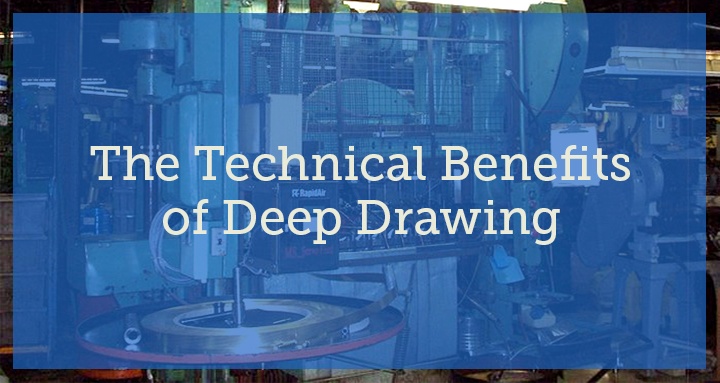
Unlike other manufacturing and industrial processes, deep drawing offers several technical benefits that make deep drawn parts highly sought after by various industries and assemblers. Naturally commercial benefits abound as well, but it is the technical aspects that make the commercial benefits worthwhile. In simple terms, deep drawing is the process by which linear stress is applied to a material to draw it through a die or several dies, thus producing the final part. While some specific benefits from the process are material dependent, overall the actual process allows for diverse materials to be used, unless specific to the application. Whereas, other processes require specific materials to be used to provide the same end product.
Streamlining Slow Manufacturing Processes
Streamlining Slow Manufacturing Processes
Streamlining Slow Manufacturing Processes
December 31, 2015

A manufacturing process comprises a series of operations for the manufacture of individual components that are then assembled to produce a finished product. Initial operations are usually performed off the line as separate manufacturing processes, each with its own duration, but final product assembly is completed sequentially on the assembly line.
How to Identify If Your Current Manufacturing Process Takes Too Much Time
How to Identify If Your Current Manufacturing Process Takes Too Much Time
How to Identify If Your Current Manufacturing Process Takes Too Much Time
December 22, 2015
Many devices used by industry, law enforcement and other agencies have a cylindrical shape. Typical examples include pencil torches, writing and marking instruments and medical devices. The outer casing may be open at both ends, at one end only or be domed. For cosmetic or functional reasons, the outer casing is often polished, anodized, powder coated or plated.
Why “Made in USA” Brand Means so Much in the Manufacturing Industry
Why “Made in USA” Brand Means so Much in the Manufacturing Industry
Why “Made in USA” Brand Means so Much in the Manufacturing Industry
December 15, 2015

After years of outsourcing manufacturing overseas on the premise that it would reduce costs, more and more Americans are beginning to appreciate that the “Made in USA” brand often means better quality at the same price. It also comes with an understanding that local manufacture is good for the economy. This trend is reinforced by programs to encourage U.S. manufacturing, led by national retailers who understand the overall economic benefit of such programs. Customers and manufacturers are both scoring as a result of these initiatives to reshore the manufacturing industry.
What’s Happening in the Manufacturing Industry Around the World?
What’s Happening in the Manufacturing Industry Around the World?
What’s Happening in the Manufacturing Industry Around the World?
December 8, 2015
Despite global upheavals, the United Nations Industrial Development Organization (UNIDO) reports the manufacturing industry around the world is growing at 2 percent per annum. Indications are this will continue, with signs of a slight increase in 2016.
Most manufacturing growth is taking place in developing countries as well as in the Emerging Industrial Economies (EIE), which together are sustaining overall growth of 5 percent. Industrialized economies are lagging far behind, and despite initial forecasts of 3 per cent growth in 2015, manufacturing growth remains below 2 percent.
However, when the results for the industrialized economies are broken down, it becomes clear that East Asia, which incorporates Korea, Japan and the surrounding countries, is facing negative growth in manufacturing, Europe is struggling at just below 2 percent, while North American manufacturing is striding ahead at 2 to 3 percent per annum. What is also interesting is that both Europe and East Asia are only just recovering from a manufacturing recession that saw negative growth in 2012 and 2013, whilst throughout this period North American growth remained steady. China, which is grouped within the EIE, has continued to experience sustained growth rates between 7 and 9 percent.
According to the KPGM 2015 CEO outlook survey, business confidence in the U.S. is higher than overall global confidence. According to the report, North American companies are adopting aggressive growth strategies with particular focus on internal growth within North America. In Europe, manufacturing companies are still struggling to recover momentum following the serious banking and liquidity crises that hit that part of the world. In the Far East, countries such as Korea and Japan are suffering from lackluster internal growth exacerbated by strong currencies.
Although Chinese growth has slightly slowed, the country, along with other Far Eastern countries, still remains amongst the lowest cost manufacturing areas. Consequently, American companies are still continuing to offshore production to these countries, although there are signs that the trend may be slowing. One reason seems to be linked to a realization that “Next Shoring,” the manufacture of goods close to where they will be sold, makes economic sense along with shorter delivery times allowing for a faster turnaround time. Although this doesn’t mean that offshoring manufacture in the Far East will necessarily be cut, it does mean that the manufacturing industry around the world is seeking to manufacture products in regions close to where there is a demand.

Which Manufacturing Process is the Most Reliable?
Which Manufacturing Process is the Most Reliable?
Which Manufacturing Process is the Most Reliable?
December 1, 2015

To some extent answering the question as to which manufacturing process is the most reliable is like answering a question about when you should take a vacation. In both cases, the answer depends upon several factors.
What Manufacturing Processes are Most Popular Overseas?
What Manufacturing Processes are Most Popular Overseas?
What Manufacturing Processes are Most Popular Overseas?
November 24, 2015
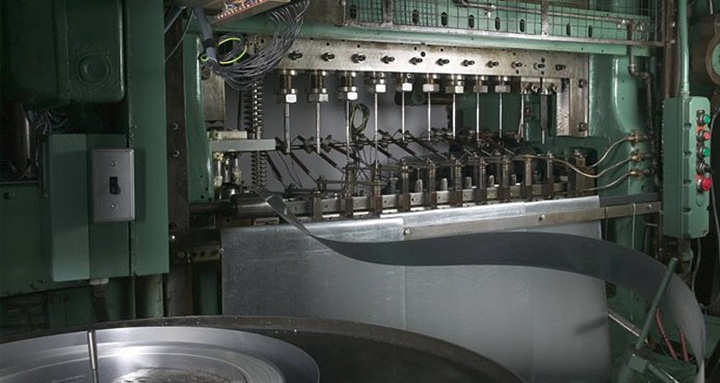
Although the trend to offshore manufacturing jobs appears to have peaked, many American companies continue to move production from the U.S. to foreign countries, usually in the belief that this will reduce labor and manufacturing costs. Research indicates that while there are clear benefits for some industries, offshoring is not always the panacea it’s made out to be. Further, as manufacturing costs overseas rise, it seems that the trend towards offshoring may be slowly reversing.
Has Manufacturing Overseas Gotten Any Safer?
Has Manufacturing Overseas Gotten Any Safer?
Has Manufacturing Overseas Gotten Any Safer?
November 17, 2015

With the demand for cheaper products, many American manufacturers assemble or purchase manufactured goods overseas. But this comes at a price because worker safety in manufacturing overseas, especially in the Far East, has always lagged behind North American safety standards. The consequences of poor worker safety is more than just the risk of injury, because negative publicity surrounding incidents can tarnish the reputation of the U.S. company that has placed the order for goods. This is especially so because society is starting to hold American companies responsible for ensuring their overseas suppliers operate safely.