



Guide
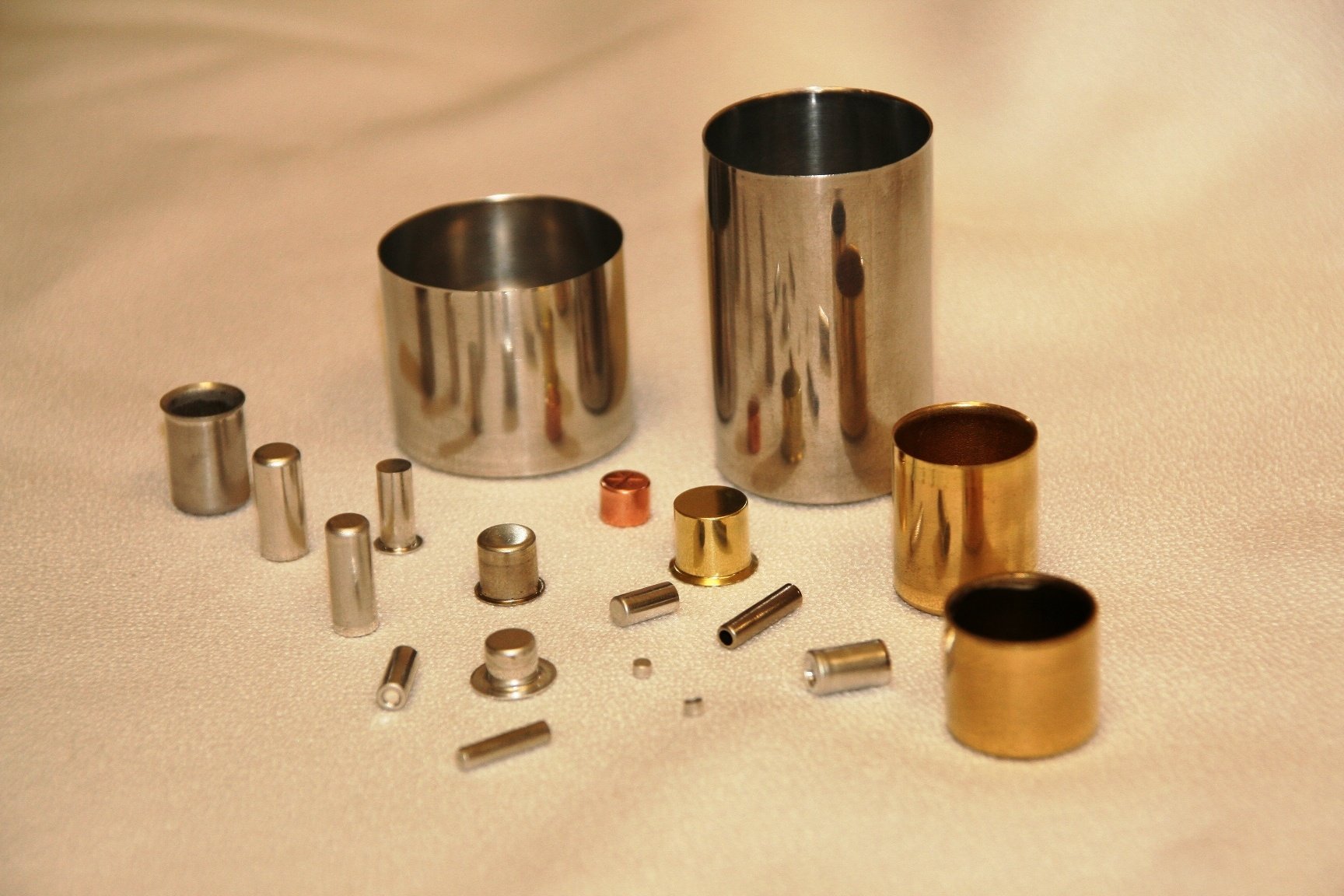
Deep Drawn Metal Forming for Medical Device Components

Deep Drawn Metal Forming for Medical Device Components
Medical device components are built to the highest standard, because every housing, cannula, sensor enclosure, and implant body in a device has a direct role in patient outcomes. That level of responsibility calls for parts that perform precisely, qualify cleanly, and hold up across the full life of a device program.
That means sourcing a forming process and a manufacturing partner capable of meeting tight tolerances, material requirements, and traceability with the structural integrity that seamless construction provides.
Deep drawn metal forming has become a go-to solution for exactly these applications. Here’s what’s driving the popularity in deep drawn metal forming for medical components, and what to understand before sourcing begins.
Why Deep Drawn Metal Forming Works for the Medical Industry
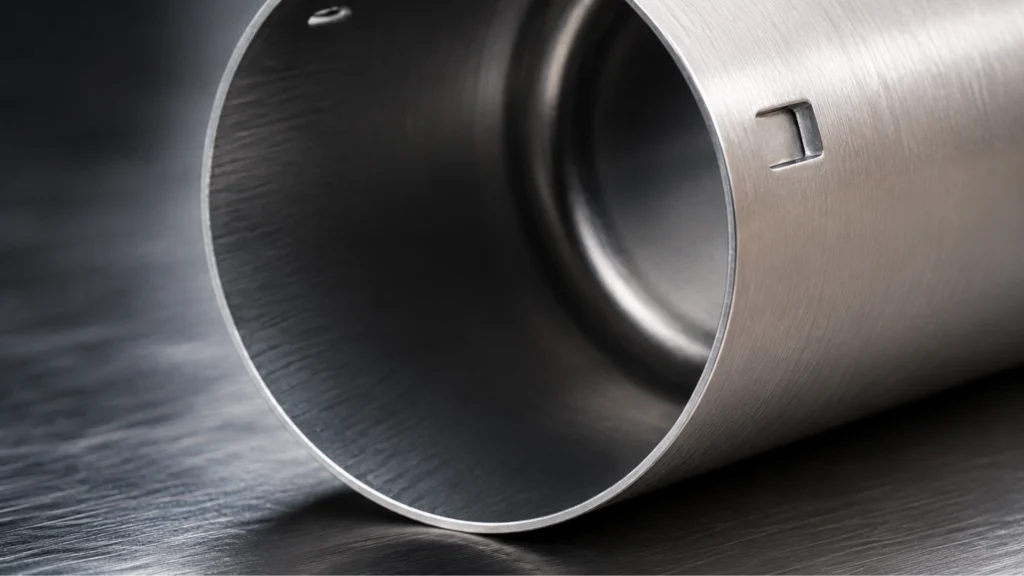
Deep drawn metal forming is a cold-working process that pulls a flat metal blank into a die using a punch, forming a seamless, three-dimensional shape from a single continuous piece of metal. Unlike fabrication methods that weld, join, or machine parts from stock, the deep draw process creates a part whose walls, base, and geometry emerge from one unbroken material structure.
That matters in medical applications for a specific reason: Seams and joints are sites of potential failure. They collect contaminants, create stress concentrations and complicate sterilization and leak testing. A seamless deep drawn housing eliminates all of that at the material level.
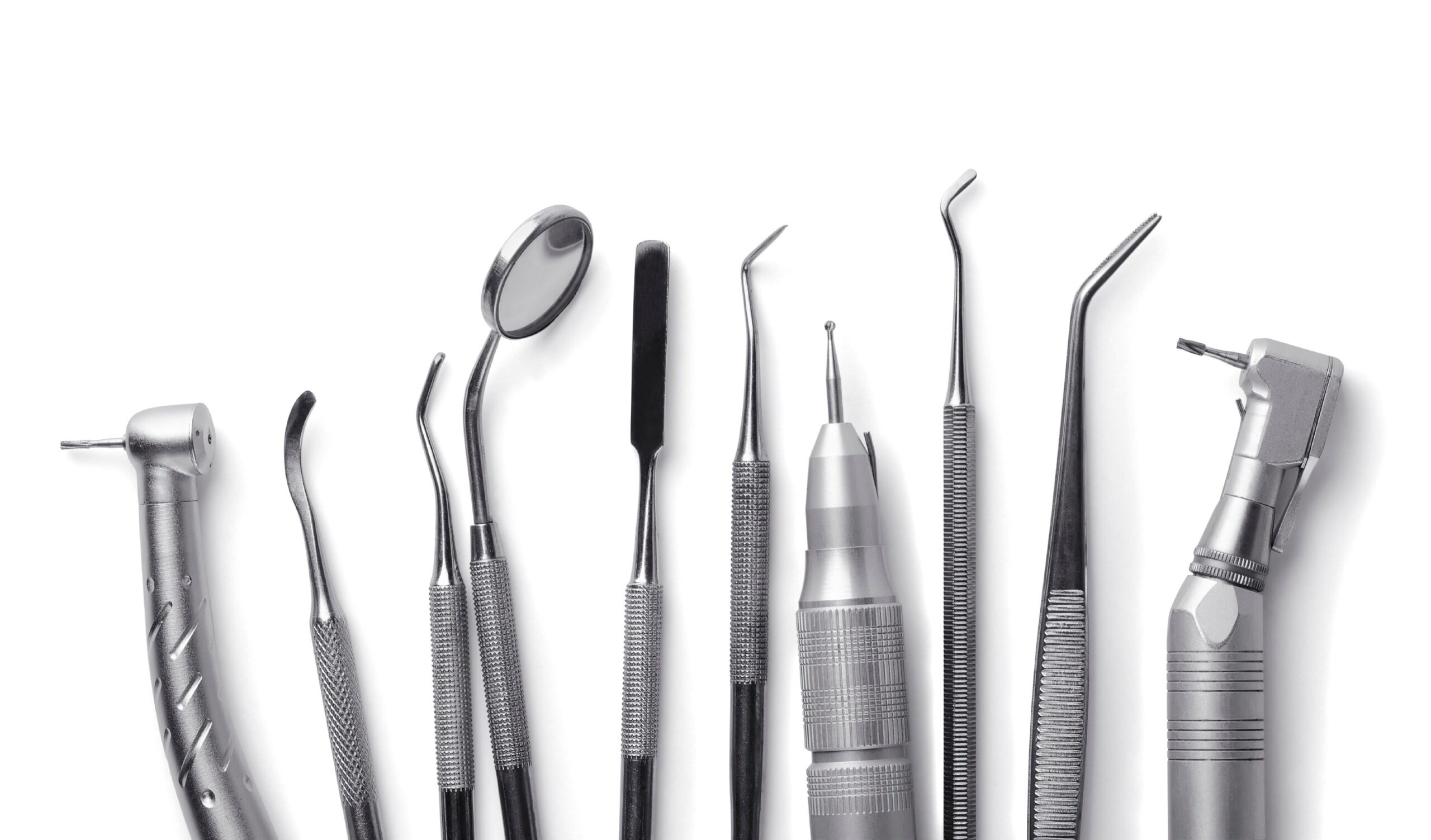
Common medical device applications include surgical instrument housings and handles, implantable device enclosures, fluid delivery and catheter components, diagnostic sensor housings, and battery or power module casings for active implantables.
Material Selection: A Design-Phase Decision
Choosing the right material for a deep drawn medical component shapes everything from tooling design to regulatory documentation. The forming process works with a range of biocompatible metals, and not every alloy deep draws identically.
Draw ratios, annealing requirements, and wall thickness behaviors all vary, which is why material selection should be confirmed during the manufacturability review phase, before it affects lead time.
316L Stainless Steel is the most common choice for medical applications. Its corrosion resistance, biocompatibility, and ease of cleaning make it suitable for implantable housings, surgical tools, and fluid-contact components. The low carbon content reduces sensitization during the forming process.
Titanium alloys offer superior biocompatibility and strength-to-weight ratio for implantable applications, though they require precise process control due to springback behavior during forming.
Aluminum alloys appear in non-implantable housings and cases where weight reduction is a design priority, such as diagnostic equipment enclosures, for example.
Copper and brass alloys are used in certain electrical contact and connector applications where conductivity is required alongside formed geometry.
Design for Manufacturability: Getting It Right Before Tooling
Geometry that was never evaluated for formability before tooling is the most common source of cost and schedule overruns in deep drawn component programs. Corners that are too sharp, wall-to-depth ratios that exceed material limits, and surface finish specifications that require post-process operations all add time and cost that a design-phase manufacturability review can prevent.
Engaging a forming partner early typically reduces tooling revisions, accelerates qualification timelines, and produces a more manufacturable part at a lower per-unit cost.
A manufacturability review with an experienced deep draw forming partner early in the design process should address:
- Draw ratio: The relationship between blank diameter and part diameter, which determines how many draw stages are needed.
- Wall taper and draft angles: Affecting both the forming process and part ejection.
- Corner radii: Internal and external radii must meet minimum thresholds to avoid material thinning or tearing.
- Tolerance stackup: Particularly for components that interface with machined or molded mating parts.
- Surface finish requirements: Smooth bore requirements for fluid contact, polished exteriors for sterilization compatibility.
Accurate Forming: A Partner Built for the Long Run
Medical device programs don’t end at first article approval. Components go into devices that may remain on the market for a decade or more. A supplier who can support program longevity, with consistent tooling maintenance, stable lot-to-lot quality, and responsive lead times, is worth as much as their initial price per piece.
Accurate Forming’s customer base spans long-term relationships across medical, defense, and industrial markets, built on the process depth and program management discipline these programs require.
If you’re evaluating deep drawn metal forming for an upcoming medical device component, the right starting point is a manufacturability review. Bring your requirements, and Accurate Forming’s team will tell you exactly what the process can deliver.
Deep Drawing vs CNC Machining: Comparing Cost, Speed, and Scalability
Deep Drawing vs CNC Machining: Comparing Cost, Speed, and Scalability
When you’re in the design phase of a new component, one of the earliest and most consequential decisions you’ll make is which metal forming process to use. The right choice optimizes cost, lead time, and long-term scalability from the start, setting your program up for a smoother path from prototype to full production.
For OEM engineers and supply chain leaders evaluating cylindrical, hollow, or seamless metal components, the comparison almost always comes down to two methods: deep drawing and CNC machining. They’re both capable of producing tight-tolerance parts, but they are built for fundamentally different scenarios.
What Each Process Does
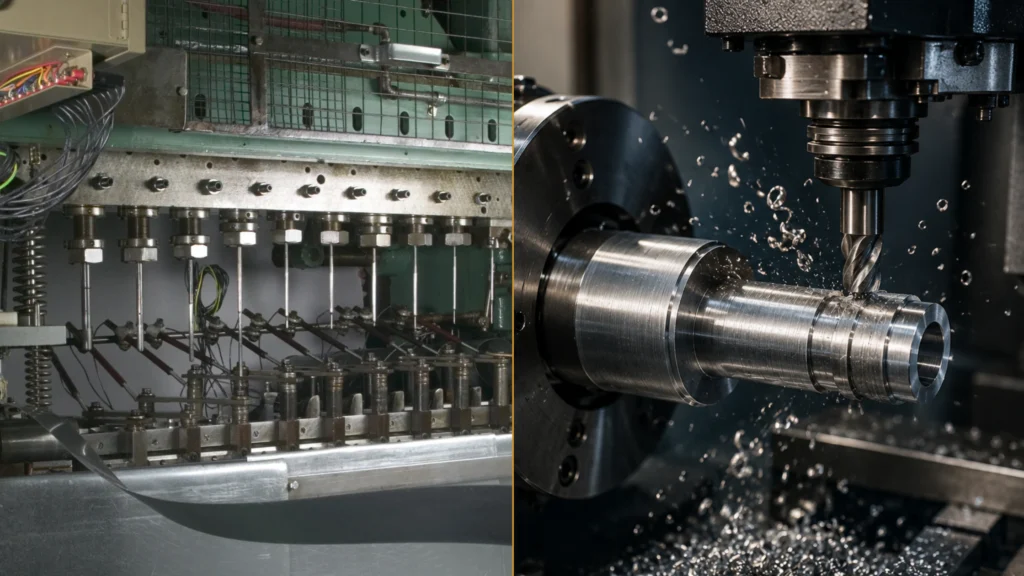
Deep drawn metal forming starts with a flat sheet of metal and uses a series of punch-and-die stations to progressively shape the material into a three-dimensional part, typically cylindrical, cup-shaped, or tubular. The depth of the final part is usually greater than its diameter. No material is cut away; it’s stretched and formed. The result is a seamless, work-hardened part with walls of uniform thickness.
CNC machining is a subtractive process. It begins with a solid block of material and uses computer-controlled cutting tools to remove material until the desired geometry is achieved. CNC is highly flexible and capable of complex features, but every chip of metal removed is waste, and every setup takes time.
Where The Metal Forming Processes Diverge: Cost, Speed, and Scale
Cost-Per-Part at Volume
This is where deep drawing makes its strongest case. Because the process is fully automated and runs at high speed once tooling is established, the cost-per-part drops sharply as volume increases. Secondary operations such as beading, notching, piercing, and chamfering can often be integrated directly into the forming process when possible, eliminating additional processing steps and reducing overall production time.
CNC machining carries a different cost structure. Setup costs are fixed regardless of batch size, and machine time adds up quickly on complex geometries. Material utilization is also lower, since the subtractive process generates chip waste that deep drawing avoids almost entirely.
For high-volume runs of hollow or cylindrical parts, deep drawing consistently delivers a lower cost per unit. CNC machining becomes more competitive at low volumes or for prototype-stage quantities where tooling investment isn’t yet justified.
Speed and Lead Time
Once deep draw tooling is built, production is fast. Presses run continuously with automated feeding systems, and parts are ejected finished without manual intervention between stations. For established part geometries, this means high throughput and consistent cycle times.
CNC machining is more flexible at the setup stage but slower in production. Each job requires programming, fixturing, and operator oversight. For simple or medium-complexity parts in moderate volumes, CNC can be competitive on lead time. For runs measured in tens of thousands of units, deep drawing has a clear speed advantage.
Scalability
Scalability is the most decisive factor for teams planning production ramps. Deep drawn metal forming is scalable, the tooling is hard tooling specific to each job, and once validated, it produces identical parts at high volume without drift. Part-to-part uniformity is one of the process’s core strengths.
CNC machining scales differently. It can accommodate design changes more readily, but it doesn’t achieve the same throughput or cost efficiency at high volumes. For teams with stable designs and production forecasts, deep drawing offers a more reliable path to scalability.
Deep Drawing vs CNC Machining Comparison Chart
| Deep Drawn Forming | CNC Machining | |
| Process type | Formative (no material removal) | Subtractive (material removed) |
| Best volume range | Medium to high volume | Low to medium volume |
| Cost per part at scale | Low | Moderate to high |
| Material waste | Minimal — excess is trimmed and recycled | 30–40% typical chip waste |
| Tooling investment | Required upfront; amortized over volume | Lower upfront; higher recurring setup cost |
| Design changes | Requires new tooling | Program update; more flexible |
| Part strength | Work-hardened during forming | Dependent on stock material properties |
| Surface finish | Smooth, seamless, consistent | Good; may require secondary finishing |
| Secondary ops | Often integrated into press sequence | Typically separate operations |
| Lead time at volume | Fast once tooling is established | Consistent but slower per-unit |
When to Choose Deep Drawing
Industries where deep drawing dominates, including medical devices, automotive sensors, defense components, and precision writing instruments, share a common requirement: high-volume, repeatable parts that perform exactly the same way every time.
Deep drawing is the stronger choice when:
- The part is cylindrical, tubular, or cup-shaped with a depth greater than its diameter
- Production volumes justify the tooling investment
- The design requires seamless construction with no welds or joints
- Long-term cost-per-unit is a priority
- Consistent wall thickness, structural integrity, and tight tolerances are required
When CNC Machining Makes More Sense
CNC is the right call when:
- The part requires complex external geometry, internal threads, or features that deep drawing cannot achieve
- You’re in early prototyping and need design flexibility before committing to tooling
- Production quantities are low enough that tooling investment isn’t justified
- The material grade or part geometry is incompatible with the deep draw process
Starting with the Right Process: Why DFM Matters
The best way to avoid a costly process mismatch is to evaluate your design before committing to production tooling. At Accurate Forming, a manufacturability review at the design stage identifies whether a part is a strong candidate for deep drawing, or whether a different approach better fits the geometry, material, and volume requirements.
Accurate Forming works with OEMs across medical, automotive, defense, and industrial sectors to produce tight-tolerance components that meet demanding specifications.
If you’re evaluating a component in the design phase, get an early read on which metal forming process fits best.
Deep Drawing vs. Metal Stamping: Which Process Is Right for Your OEM Metal Parts?
Deep Drawing vs. Metal Stamping: Which Process Is Right for Your OEM Metal Parts?
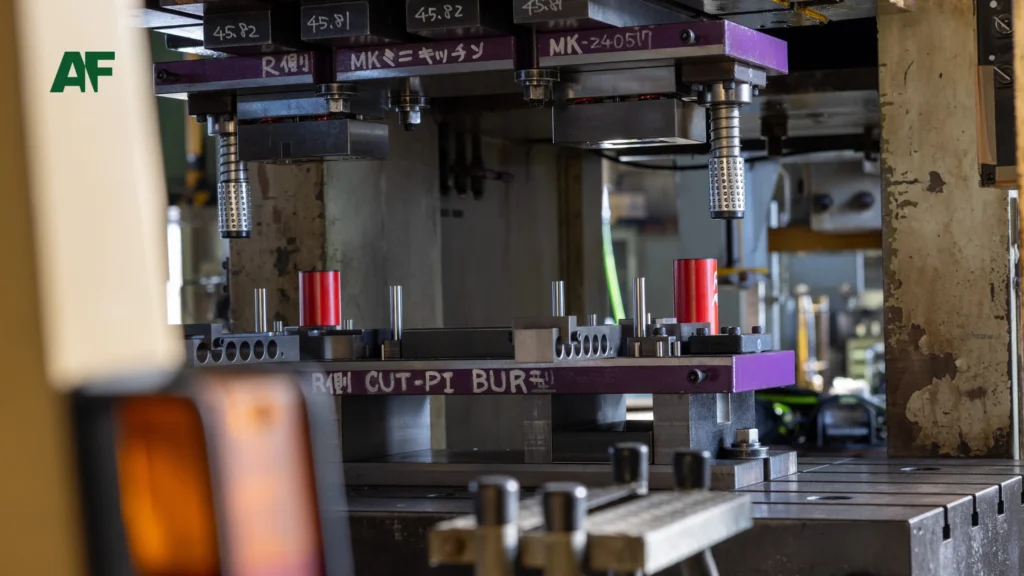
Choosing the right forming process shapes more than just metal. It influences cost, performance, and the efficiency with which a part moves from design to production. Deep drawing and metal stamping are two methods frequently evaluated together. Both use presses and dies, but each is suited to different part geometries and production requirements.
Understanding where they differ early in the design process helps teams select the right method from the start, keeping tooling decisions aligned with part performance and program goals.
Key Differences Between Deep Drawing and Metal Stamping
Although both processes use press equipment, the mechanics and applications differ significantly.
| Deep Drawing | Metal Stamping | |
|---|---|---|
| Primary Function | Forms deep, hollow shapes | Cuts, bends, or forms sheet metal |
| Typical Part Geometry | Cylindrical components | Flat or shallow pieces |
| Material Flow | Metal flows into the die cavity | Metal is cut, bent, or shallow-formed |
| Assembly Needs | Often eliminates secondary assembly | May require multiple parts or welds |
| Structural Integrity | Seamless construction | May include joints or seams |
When Deep Drawing Is the Better Option
This method becomes the preferred choice when a part requires significant depth, structural integrity, and consistent wall thickness.
Teams initially design elements to be stamped and assembled, only to find, during manufacturability review, that consolidating them into a single drawn component would reduce part count, improve strength, and lower total costs.
Specific advantages include:
- Fewer parts and fasteners
- Improved structural strength
- Reduced welding and assembly labor
- Lower total manufacturing cost at volume
- A late-stage process change after tooling is committed can add weeks to a program timeline and significant retooling costs. Evaluating the forming method early avoids that risk.
A late-stage process change can add weeks to a program timeline and significant retooling costs. Evaluating the method early avoids that risk.
When Metal Stamping Is the Better Option
Metal stamping becomes the preferred choice when a part is primarily flat or shallow, with geometry that doesn’t require significant depth or seamless construction. It’s well-suited for high-volume programs where components need tight tolerances across simple or moderately complex forms.
This process is the more cost-efficient path from the start, particularly when parts don’t need to bear structural loads as a single continuous piece.
Where stamping performs well:
- Faster tooling setup for flat or low-profile components
- Consistent part quality across high production volumes
- Flexibility across multiple forming operations in a single progressive die
- Lower per-part cost for shallow geometries at scale
If a component can be flat, joined, or moderately formed without performance trade-offs, stamping is likely the right process.
Design Considerations
Engineering teams benefit from collaborating with forming specialists during a manufacturability review to ensure part design aligns with the best production method. Key factors to evaluate:
Part geometry is the primary driver. When depth exceeds a part’s diameter, or the design calls for complex hollow shapes, deep drawing is typically the more efficient path.
Material selection also matters. Stainless steel, aluminum, copper alloys, and nickel alloys all perform well in deep drawing. Ductility determines how cleanly metal flows during the process, which directly affects wall uniformity and structural consistency.
Production volume considerations are similar for both processes at scale. Deep drawing tends to gain an efficiency advantage when the design allows multiple components to be consolidated into one part, reducing assembly steps and eliminating welds or fasteners.
Why Manufacturability Reviews Matter
A manufacturability review is the best opportunity to optimize component design before production begins. Forming specialists analyze material behavior, potential thinning or wrinkling, tooling requirements, and overall production efficiency.
Identifying opportunities to convert multi-part assemblies into a single drawn component improves both product performance and program economics. Early collaboration helps avoid overly complex tooling, excessive material waste, and unnecessary assembly operations.
Choosing the Right Metal Forming Partner
Deep drawing and stamping serve different design requirements. Teams working with deep geometries, cylindrical parts, or seamless housings benefit from partnering with manufacturers specializing in deep-draw forming.
At Accurate Forming, we provide early manufacturability input, tooling expertise, and material selection guidance tailored to high-volume programs. Working with a dedicated deep-draw specialist from the start means that part design and process are aligned before tooling is committed, which translates directly into better performance and lower long-term costs.
Ready to find the right process for your part? Share your part requirements, and our team will help you determine the best forming method for your program.
Deep Drawing Stainless Steel: What OEMs Need to Know Before Sourcing a Part
Deep Drawing Stainless Steel: What OEMs Need to Know Before Sourcing a Part
If your component requires a seamless, corrosion-resistant geometry with tight dimensional tolerances and you’re still evaluating whether metal stamping, machining, or deep draw forming is the right call, this blog is written for you.
Stainless steel is one of the most demanding materials in precision metal forming. Its high work-hardening rate, tendency to gall against tooling, and springback behavior make it an unforgiving choice for OEMs who aren’t working with a supplier that specializes in the process. Yet when deep drawn forming is executed correctly, stainless delivers a combination of strength, finish quality, and part integrity that few alternatives can match.
Here’s what design engineers and sourcing leads at OEM organizations need to understand before committing a stainless program to production.
Why Stainless Steel Is Harder to Deep Draw Than Other Metals
Austenitic stainless grades such as 304, 316, and 316L are common choices for deep drawn components because of their corrosion resistance and performance in demanding environments. But those same grades can be less forgiving in forming applications.
Each draw reduces ductility, which means multi-stage parts must be carefully sequenced to avoid cracking or surface failure. The material’s high tensile strength also requires significantly greater press tonnage, and the friction coefficient between stainless and the die surface demands premium tooling materials and lubrication strategies.
For OEMs, this translates into a supplier qualification question: does your forming partner have the process knowledge and tooling infrastructure to manage work-hardening across a part’s entire draw sequence? This is not a generalist capability. It belongs to specialists.
Deep Draw Forming Versus Metal Stamping — What OEMs Are Actually Choosing Between
When OEM engineers look at cylindrical, cup-shaped, or hollow components, two process families often come up in the same conversation: metal stamping (progressive or transfer die) and deep drawn forming. These are related but meaningfully different, and the distinction matters for part design, lead time, and long-run unit cost.
Metal stamping, including progressive die stamping, is optimized for high-speed production of flat or shallow forms — brackets, flanges, connectors. Deep draw forming is purpose-built for parts where the depth meets or exceeds the diameter, producing a seamless, hollow geometry from a single blank without the need for assembly, welding or assembly seams.
Process Comparison for Hollow Stainless Components
| Criteria | Deep Draw Forming | Metal Stamping / Progressive Stamping | CNC Machining |
|---|---|---|---|
| Hollow part capability | Strong fit for deeper hollow geometries | Can produce hollow features, especially at shallower depths | Yes |
| Seamless construction | Often produced from a single blank | Depends on part design and process route | Yes |
| Material waste | Low | Moderate | High |
| High-volume unit cost | Very competitive at volume | Very competitive for suitable geometries | Typically higher |
| Complex depth-to-diameter relationships | Strong fit | More limited as depth increases | Yes, at higher cost |
| Leak-sensitive applications | Strong potential due to seamless geometry | Depends on geometry and downstream requirements | Yes |
| Initial tooling investment | Moderate | Moderate to high | Lower upfront, higher per-part cost |
| Stainless suitability | Excellent with the right tooling and process expertise | Suitable for many applications, especially shallower forms | Suitable |
Design Factors That Drive Manufacturability and Cost
The most common source of cost overruns and delayed launches in deep drawn stainless programs is a design that was finalized before a manufacturability review. Wall thinning, draw ratio, corner radii, and material grade selection all interact in ways that aren’t always visible in a CAD model but have significant process implications.
A few considerations that matter most for stainless programs:
Draw ratio: The limiting draw ratio (LDR) for 304 stainless is more constrained than for aluminum or low-carbon steel. Parts requiring a depth-to-diameter ratio above approximately 2:1 will typically require intermediate annealing operations between draw stages. Factor this into tooling timelines.
Wall thickness tolerances: Deep drawn parts will experience wall thinning, typically greatest at the punch radius. Specifying extremely tight wall tolerances at the draw transition zone can dramatically complicate the process. Design engineers should discuss tolerance stackup with their forming partner before the design is released.
Material grade selection: 304 is the workhorse for most deep drawn stainless applications. 316L is preferred in corrosive or medical environments. Duplex and ferritic grades are gaining ground in cost-sensitive applications as nickel-price volatility continues to affect 300-series pricing.
As a best practice, request a manufacturability review from your forming supplier before tooling is committed. Adjustments to corner radii, draw depth, or material grade made at the design stage cost a fraction of what they cost after the first article.
What to Look for in a Deep Draw Stainless Supplier
Not every metal forming shop has the equipment, process control, or application experience to produce stainless deep drawn components at OEM quality standards. Key qualifications to verify include: ISO 9001:2015 certification, documented experience with stainless grades and multi-stage draw sequences, in-house secondary operations (trimming, piercing, polishing, plating), and the project management infrastructure to serve as a primary vendor, not just a job shop.
ITAR registration is a non-negotiable for programs touching defense or law enforcement. And for medical OEMs, supplier qualification documentation and process traceability need to be part of the conversation from day one, not an afterthought during PPAP.
Accurate Forming has been producing deep drawn metal components for over 60 years, with deep expertise in stainless steel for medical, defense, and precision instrumentation applications. ISO 9001 registered and ITAR compliant, Accurate Forming functions as a lead vendor, managing tooling, in-house finishing, and outside operations, so OEM teams aren’t coordinating across multiple suppliers to bring a single part to completion.
Have a stainless component that needs deep draw forming? Get a manufacturability review and custom quote from Accurate Forming’s engineering team. ???? Request a Quote

Why the Most Critical Components in Your Medical Device Can’t Afford a Seam
Why the Most Critical Components in Your Medical Device Can’t Afford a Seam
Medical device engineers and OEM leadership teams are navigating one of the most demanding manufacturing environments in history. Patient safety, FDA compliance, miniaturization, and cost efficiency are dependent on the geometry of a single metal component. And when that component fails, the consequences extend far beyond a recall.
So here’s the question every engineering leader sourcing metal parts for medical devices should be asking: Is my forming process actually suited to the demands of this application — or am I compromising performance to fit a supplier’s capability?
Where Most Metal Forming Methods Fall Short in Medical Applications
To understand why deep draw metal forming has become the standard for high-precision medical components, it helps to understand what other processes can’t deliver.
Machining has historically been the go-to for complex metal parts. It involves creating components by subtracting material. That means seams, joints, and welds are often unavoidable in complex geometries. For medical devices, each seam is a potential site for bacterial colonization, corrosion, or structural fatigue. It also means more raw material waste, longer lead times, and unit costs that scale poorly.
The deep draw metal forming process presses flat sheet metal into a die, transforming it into a hollow, seamless three-dimensional form without cutting or joining material. The result is a structurally unified part that carries the work-hardened strength imparted by the forming process itself.
| Evaluation Criteria | Deep Draw Metal Forming | CNC Screw Machining |
|---|---|---|
| Seamless construction | Yes — single-piece integrity | Often requires joins or welds |
| Surface hygiene | Smooth, cleanable walls | Seams can trap contaminants |
| Tolerance precision | ±.001" ID/OD | ±.001" ID/OD |
| Material waste | Minimal — metal is shaped, not cut | High — removal-based process |
| High-volume cost efficiency | Scales well | Cost rises steeply at volume |
| Long length / small diameter | Achievable | Challenging at extreme ratios |
| Work hardening benefit | Inherent to process | Not applicable |
What Medical OEMs Actually Need from a Metal Component
When you’re engineering a surgical instrument, an insulin delivery device, a dental laser component, or an implantable housing, the requirements converge around a consistent set of demands:
Seamless, sterilizable surfaces.
In clinical environments, surface geometry is a biosafety variable. Deep drawn parts offer smooth, uninterrupted walls with no weld lines, no gaps, no crevices where pathogens can hide between sterilization cycles.
Tight dimensional repeatability.
Device functionality often depends on precise internal and external diameters maintained across thousands of units. Deep draw metal forming routinely holds tolerances of ±.001″ on inside and outside diameters.
Material compatibility with the human body.
Material selection is as important as the manufacturing method in medical applications. Different materials are chosen based on specific clinical needs. For example, Titanium is ideal for implant-adjacent uses because of its strength and corrosion resistance. It also becomes stronger during the deep drawing process due to work hardening. On the other hand, surgical-grade stainless steel offers strong corrosion resistance with controlled nickel levels, reducing the risk of allergic reactions and improving patient safety.
Design adaptability.
Medical devices change and improve very quickly. Because of this, companies need flexible manufacturing options during development. Converting a machined component into a deep drawn part can provide a strong competitive advantage. Deep drawn parts are often more cost-effective and better suited for high-volume production. This allows teams to test and refine designs quickly, reducing risk and avoiding costly mistakes.
The Miniaturization Challenge
Perhaps no trend in medical device manufacturing creates more acute pressure on metal component suppliers than miniaturization. Wearables, minimally invasive surgical tools, implantable diagnostics — these categories are converging around one imperative: do more, in less space, with zero margin for error.
There has been a visible surge in investments in the biomedical industry, especially in wearable and minimally invasive devices and the components inside those devices are getting smaller, longer relative to their diameter, and more geometrically complex with every product generation.
Deep draw metal forming is especially well suited for this type of challenge. It can produce small-diameter, long, and highly precise components in a single piece.
This is difficult to achieve with other manufacturing methods. When a device needs a narrow, seamless, and strong cylindrical housing, deep drawing is often the best choice.
Unlike machining, which removes material by cutting, deep drawing shapes the metal by stretching and forming it. This process creates stronger structural properties that traditional cut-and-machine methods cannot easily match.
Why Your Supplier Choice Is a Quality Decision
The global medical device contract manufacturing market was estimated at $76.8 billion in 2024 and is projected to reach $151.98 billion by 2030, growing at a CAGR of 12.36%. As the market expands, so does the number of suppliers competing for your business. Not all of them are equal, and in medical device manufacturing, the gap between adequate and excellent can mean the difference between a cleared device and a costly recall.
For medical OEMs, evaluating a deep draw metal forming partner means looking beyond price-per-part. It means asking:
- Are they ISO 9001 certified with documented quality systems specific to medical component production?
- Do they have in-house tool-making capability, or are you absorbing the coordination risk of a fragmented supply chain?
- Can they manage secondary operations — plating, polishing, threading, heat treating — under one roof, reducing your handling burden and liability exposure?
The answers to those questions determine whether your supplier is a vendor or a quality partner.
Engineering Confidence Starts Before the First Draw
The best metal forming outcomes for medical devices don’t start at the press. They start in the design phase, when an experienced team can assess whether a component is optimized for the deep draw process, identify wall thickness ratios that ensure structural integrity, specify the right material grade for the application, and anticipate the secondary operations needed to meet final device specifications.
That upstream partnership is what compresses development timelines, prevents costly redesigns, and builds the documentation trail that supports FDA submission requirements.
Accurate Forming has been manufacturing deep drawn metal components for medical OEMs since 1955. With ISO 9001 certification, in-house tooling, secondary operations under one roof, and a 70,000 square foot facility in Hamburg, NJ, we take full responsibility for delivery — on time, within specification, under budget.
When the integrity of your device depends on the integrity of its components, the forming process isn’t a detail. It’s the foundation.
Ready to evaluate deep draw metal forming for your next medical device component? Contact Accurate Forming to speak with an engineer or request a quote.
Deep Drawing Process Explained: From Blank to Finished Part
Deep Drawing Process Explained: From Blank to Finished Part
Deep Drawing Process Explained: From Blank to Finished Part
For OEM leaders and engineers, the difference between a reliable component and a production bottleneck often comes down to how that component is formed. Tolerances must be held well. Wall thickness must remain consistent. Secondary operations must align with schedule and cost targets.
The deep drawing process answers these challenges by transforming flat metal blanks into seamless, high-precision components that support demanding applications across industries.
This article explains the deep drawing process step by step, outlines what engineers should evaluate at each stage, and highlights how an integrated manufacturing partner improves outcomes from concept through shipment.
What Is the Deep Drawing Process?
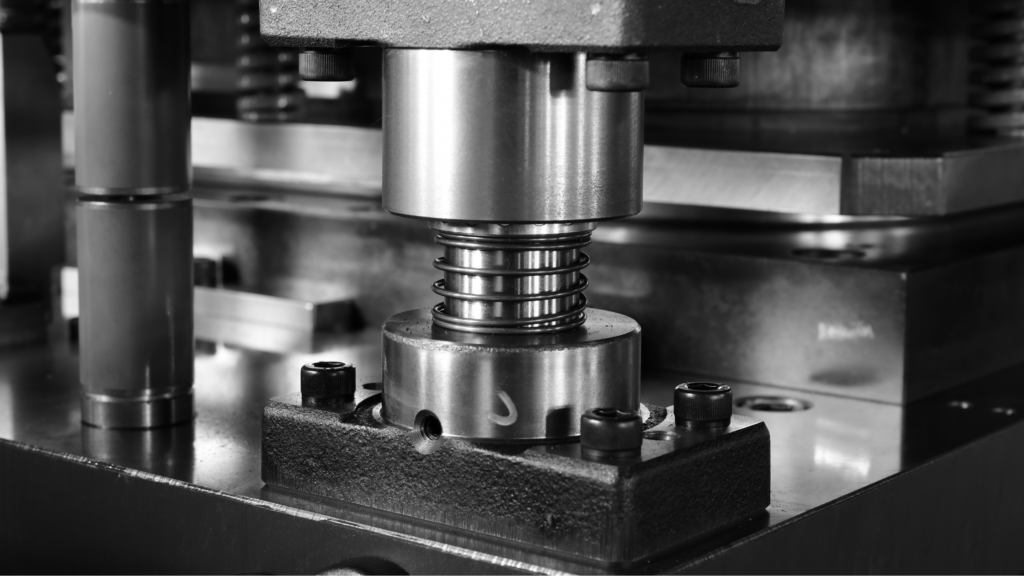
The deep drawing process is a metal forming method used to create cylindrical components from flat sheet metal. A flat blank is placed over a die cavity and mechanically drawn into the die by a punch. As the metal flows inward, it forms into a seamless part with controlled geometry and structural integrity.
Unlike shallow forming methods, deep drawing is used when the depth of the part exceeds its diameter. The result is a one-piece component with excellent concentricity, strength, and repeatability.
For OEMs searching for deep drawn stamping solutions, it is important to understand that true deep drawing is a specialized forming discipline requiring controlled material flow, precision tooling, and engineering collaboration.
Step 1: Blank Preparation
Every successful deep drawn part begins with the blank.
Engineers evaluate:
- Material type
- Thickness
- Grain direction
- Surface finish requirements
- Tolerance expectations
Step 2: Tooling Design and Manufacturing Collaboration
Tooling is the foundation of the deep drawing process. Die geometry, punch radius, draw depth, and blank holder pressure must all work together to allow smooth material flow.
Manufacturer collaboration early in the design phase improves manufacturability and cost control. Solid modeling tools such as SolidWorks enable high-precision simulations and allow teams to identify potential stress points before production begins.
Step 3: The Drawing Operation
Once tooling is prepared and blanks are cut, the forming process begins.
The blank is positioned over the die cavity and secured by a blank holder. The punch descends and draws the metal into the cavity in a controlled manner. Material flow must remain uniform to prevent defects such as:
- Wrinkling
- Tearing
- Earing
- Unwanted piercing
- Radius fractures
- Excessive wall thinning
In many cases, deeper parts require multiple draws to achieve final geometry without overstressing the material. Each redraw further refines shape and dimensional accuracy.
The ability to manage this progression consistently separates general forming operations from true deep drawing expertise.
Step 4: Secondary Operations and Finishing
For many OEMs, the forming operation is only part of the challenge. Surface finishing, polishing, plating, coating, and other treatments often require coordination between multiple vendors.
Fragmented supply chains introduce complexity, cost, and scheduling risk. When secondary processes are integrated under one coordinated system, quality accountability improves and lead times stabilize.
Ongoing supply chain volatility has driven many manufacturers to streamline supplier networks, reduce freight exposure, and consolidate operations under fewer, more accountable partners. For project managers overseeing complex builds, centralized accountability protects both schedule and reputation.
Integrated production supports:
- Reduced handling
- Fewer transit delays
- Improved quality control
- Simplified procurement management
Step 5: Inspection and Quality Assurance
Precision is non-negotiable in deep drawn components.
ISO 9001:2015 quality systems ensure repeatable processes, documented inspection protocols, and continuous improvement standards. For industries with regulatory requirements, ITAR registration adds another layer of compliance confidence.
Inspection checkpoints typically include:
- Dimensional verification
- Surface finish review
- Concentricity measurement
- Wall thickness evaluation
Engineers gain confidence when quality control is embedded into every stage rather than treated as a final checkpoint.
Step 6: Shipping, Inventory, and Long-Term Supply Stability
Reliable manufacturing does not end at production.
Inventory management programs and domestic sourcing improve lead time predictability. For OEM executives managing lean operations or Just-In-Time production schedules, supply stability directly affects profitability. A stable, domestic supply chain reduces uncertainty and strengthens long-term production planning.
Deep Drawing Process Comparison
Below is a high-level comparison of forming approaches relevant to OEM component design:
| Criteria | Deep Drawing Process | Multi-Piece Fabrication |
|---|---|---|
| Part Integrity | Seamless, single-piece construction | Welded or assembled components |
| Structural Strength | High due to uniform grain flow | Dependent on welds or joints |
| Tolerance Control | Excellent concentricity and repeatability | Variability introduced during assembly |
| Secondary Operations | Can be integrated under one system | Often fragmented across vendors |
| Long-Term Cost Efficiency | Optimized through repeatability | Higher labor and handling costs |
For engineers evaluating options, seamless forming often delivers measurable lifecycle advantages.
Why OEM Leadership Should Care
For executives and procurement leaders, the deep drawing process affects more than part geometry. It influences:
- Total landed cost
- Vendor complexity
- Risk exposure
- Production continuity
- Brand reputation
Sourcing precision metal components should not require constant oversight or cross-vendor coordination. A vertically integrated manufacturing partner provides a single point of accountability from initial concept through final shipment.
With over six decades of deep drawn metal manufacturing experience and a leadership team bringing more than a century of combined expertise , Accurate Forming supports OEMs that demand reliability, domestic materials, and precision.
ISO 9001:2015 registration and ITAR certification further reinforce compliance and quality assurance .
For engineers, this means fewer redesigns and stronger manufacturability.
For project managers, it means predictable schedules.
For executives, it means stability and long-term partnership confidence.
From Blank to Finished Part: The Strategic Takeaway
The deep drawing process is more than a forming technique. It is a strategic manufacturing solution that transforms flat sheet metal into high-performance, seamless components with strength, precision, and repeatability.
When supported by domestic materials, integrated finishing capabilities, certified quality systems, and early manufacturing collaboration, deep drawing becomes a driver of operational efficiency and supply chain stability.
For OEMs navigating tighter tolerances, supply chain pressures, and accelerated product timelines, understanding the deep drawing process is the first step. Partnering with an experienced U.S. manufacturer that manages the entire journey from blank to finished part is the advantage that sustains performance year after year.
If your team is planning a deep drawn component for an upcoming program, request a quote today and start the conversation with a manufacturing partner who can support your project from concept through production.
Deep Drawn Metal Stamping: Tolerances, Cost Drivers & Best Practices
Deep Drawn Metal Stamping: Tolerances, Cost Drivers & Best Practices
Deep Drawn Metal Stamping: Tolerances, Cost Drivers, and Design Rules
Deep drawn metal stamping is a forming process used to produce seamless, hollow metal parts at production scale. Engineers typically evaluate deep drawn stampings when part depth, structural integrity, or repeatability make machining or shallow stamping inefficient.
This article walks through the process first, then explains when deep drawing makes sense, how tolerances behave, what drives cost, and how to design parts that scale into high-volume production.
How Deep Drawn Metal Stamping Works
Deep drawing forms a flat metal blank into a hollow shape by pulling material into a die cavity using a punch. The material flows plastically rather than being cut, which creates a seamless part with work-hardened strength.
Depending on depth and geometry, parts may require multiple draw stages, trimming, or secondary forming. Each added step improves control but increases cost and tooling complexity.
Understanding this sequence is critical because tolerances, cost, and quality are all tied to how many operations are required.
When Deep Drawn Stampings Are the Best Choice
Deep drawn metal stamping is typically the right solution when:
- The part must be seamless and weld-free
- Depth exceeds what shallow stamping can form
- Consistent wall structure is required
- Production volumes justify dedicated tooling
- Secondary operations can be minimized or integrated
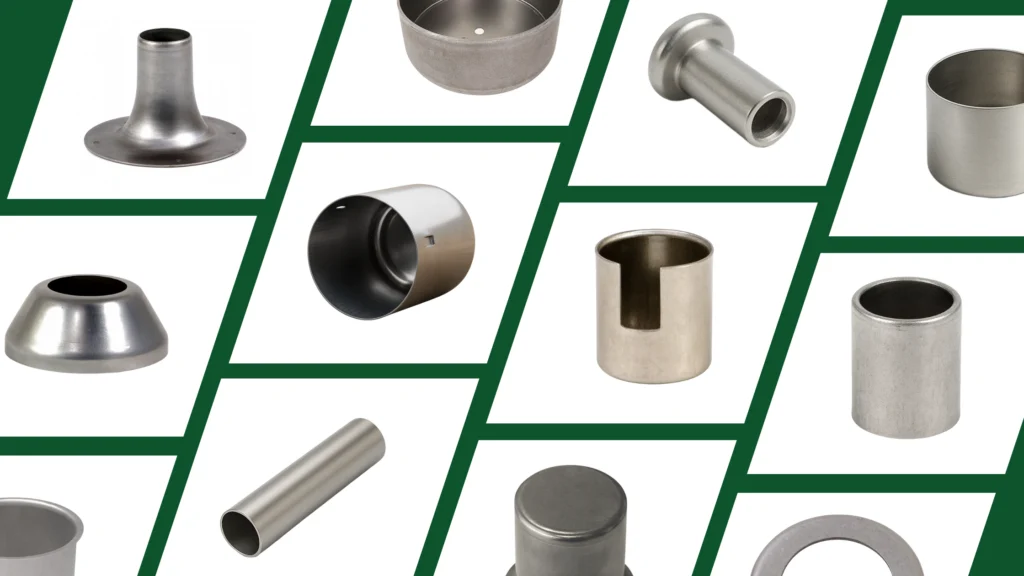
Common examples include metal cups, housings, shells, covers, and enclosures.
How Tolerances Behave in Deep Drawing
Deep drawing is a forming process, not a precision machining operation. Tolerances vary by feature and are influenced by material flow and springback.
Outside diameters are often controlled after drawing through trimming or sizing. Wall thickness varies naturally through the part, with thinning along the walls and thicker material at the base. Overall height is affected by draw depth, springback, and trim strategy. Roundness depends on material properties, draw balance, and tooling condition.
Tighter tolerances generally require secondary operations. Engineers should identify which dimensions are functionally critical and allow other features to remain form-controlled.
What Has the Biggest Impact on Tolerance
Several factors directly affect dimensional consistency:
- Material thickness and alloy behavior
- Part depth and draw ratio
- Tooling condition and wear
- Springback after forming
- Trim operations and secondary forming
Designs that demand tight tolerances early in the draw sequence increase risk and cost.
Tooling Cost and What Drives It
Tooling is the primary upfront investment in deep drawn metal stamping. Tooling cost increases with:
- High draw ratios requiring multiple redraws
- Complex geometry or non-uniform profiles
- Tight tolerance requirements
- Integrated secondary features
- Less forgiving materials
Costs can often be reduced by simplifying geometry, using larger radii, avoiding unnecessary depth, and locating critical features after the draw. Tooling investment is best suited for repeat, high-volume production where cost can be amortized over many parts.
Deep Drawn Part Design Best Practices
Good design improves both cost and manufacturability:
- Use generous corner and transition radii
- Accept natural wall thickness variation
- Keep draw ratios conservative
- Design to manage wrinkling, tearing, and earing
- Pierce holes after drawing when accuracy matters
Early input from your manufacturer prevents redesigns later in the program.
Scaling from Prototype to Production
Deep drawn parts often behave differently at prototype and production volumes.
As volume increases:
- Tooling becomes more refined
- Process controls tighten
- Inspection methods become standardized
- Secondary operations may be integrated
Designs created with scalability in mind transition more smoothly into high-volume metal stamping.
Quality and Process Controls Engineers Should Expect
Typical controls include incoming material verification, in-process dimensional checks, tool wear monitoring, and final inspection based on print requirements. Formal quality systems support repeatability and traceability.
What Engineers Should Take Away
Deep drawn metal stamping is not just about forming depth. It is about understanding how material flows, where variation is unavoidable, and which features should be controlled through design versus secondary operations.
Engineers who get the best results from deep drawn stampings typically:
- Design parts around natural material behavior instead of fighting it
- Allow non-critical features to remain form-controlled
- Specify tight tolerances only where function demands it
- Engage manufacturing input early to reduce redraws and secondary work
- Design with production scale in mind, not just prototype feasibility
When these principles are applied early, deep drawing becomes a highly repeatable, cost-effective process for high-volume metal components.
When It Makes Sense to Involve a Manufacturer Early
Manufacturing input is most valuable when:
- Draw depth or draw ratio is aggressive
- Wall thickness consistency is critical
- Secondary operations are driving cost
- Hole placement or post-draw features affect function
- The part must scale reliably into high-volume production
Early collaboration helps identify design adjustments that reduce tooling complexity, improve yield, and stabilize long-term production.
Contact Us
If you are designing or sourcing a deep drawn metal stamping and want feedback on tolerances, cost drivers, or manufacturability, contact Accurate Forming to discuss your application.
Deep Draw Stamping: What It Is and When It Beats Traditional Stamping
Deep Draw Stamping: What It Is and When It Beats Traditional Stamping
Deep draw stamping is often misunderstood or treated as a niche variation of metal stamping. In reality, it is a core manufacturing process for producing strong, seamless metal parts that cannot be made efficiently with traditional stamping methods.
If your part is cylindrical, cup-shaped, enclosed, or requires depth that exceeds its diameter, deep drawn stamping is usually the right process. This article explains how deep draw stamping works, where it makes sense, and when it clearly outperforms conventional stamping.
What Is Deep Draw Stamping
Deep draw stamping is a metal forming process that pulls sheet metal into a die cavity using a punch. Instead of cutting or bending the material into shape, the metal flows plastically under controlled pressure to form a deep, hollow part.
A part is generally considered “deep drawn” when the depth of the formed section is equal to or greater than its diameter. Examples include metal cups, cans, housings, shells, and enclosures.
Unlike shallow stamping operations, deep draw stamping reshapes the metal over multiple stages, allowing significant depth without tearing, wrinkling, or excessive thinning.
How the Deep Draw Stamping Process Works
At a high level, deep draw stamping works like this:
- A flat metal blank is placed over a die opening.
- A blank holder applies pressure to control metal flow.
- A punch pushes the metal into the die cavity.
- The metal stretches and flows inward instead of shearing.
- The part may go through multiple redraw stages to achieve final depth.
Each draw stage incrementally deepens the part while managing wall thickness and material stress. Lubrication, tooling geometry, and draw ratios are tightly controlled to prevent defects.
In many cases, secondary features such as flanges, beads, holes, or trim edges are added in the same tool or integrated draw sequence.
This ability to combine forming steps is a major advantage of deep drawn stamping.
How Deep Draw Stamping Differs from Traditional Stamping
Traditional stamping typically relies on cutting, bending, or shallow forming. It is well suited for flat parts, brackets, clips, and components with limited depth.
Deep draw stamping is fundamentally different in three ways:
- The material flows instead of being cut or sharply bent. This produces seamless walls and uniform strength.
- The process creates enclosed or semi-enclosed shapes that would otherwise require welding or machining.
- Deep drawn stamping often replaces multiple manufacturing steps with a single progressive process.
If a part requires welding, tubing, or machining to achieve its final shape, deep drawn stamping may be a better alternative.
Key Advantages of Deep Draw Stamping
Seamless, One-Piece Construction
Deep drawn stamping produces parts without seams or welds. This improves strength, pressure resistance, and leak prevention. It also eliminates failure points common in fabricated assemblies.This is critical for medical, defense, electronics, and fluid-handling applications.
Improved Structural Strength
The drawing process work-hardens the metal as it flows. This increases strength along the walls of the part without adding thickness. For cylindrical or enclosed components, this often results in stronger parts than welded or machined equivalents.
Better Dimensional Consistency at Scale
Once tooling is dialed in, deep draw stamping delivers excellent repeatability across high volumes. Wall thickness, concentricity, and depth control are more consistent than multi-step fabrication. This makes the process ideal for repeat production runs.
Lower Per-Part Cost at Volume
Tooling costs are higher upfront, but piece price drops significantly at scale. Deep drawn stamping reduces labor, welding, machining, and inspection steps. For production volumes in the tens of thousands or higher, it is often the lowest total cost option.
Cleaner Aesthetics and Surface Finish
Because the metal is formed rather than cut and assembled, deep drawn parts have smooth surfaces and uniform appearance. This matters for consumer products, medical components, and visible housings.
When Deep Draw Stamping Beats Traditional Stamping
Deep draw stamping is not always the right choice. It clearly outperforms traditional stamping when the following conditions apply:
- The part depth is equal to or greater than its diameter
- The part is cylindrical, cup-shaped, or enclosed
- Seamless construction is required
- Welding or tubing would otherwise be needed
- Strength and pressure resistance matter
- High repeat volumes are planned
If your design requires secondary operations just to achieve basic geometry, deep drawn stamping should be evaluated early.
Best-Fit Applications for Deep Drawn Stamping
Deep drawn stamping is widely used across industries that demand precision, strength, and repeatability.
Medical and Laboratory Components
Common parts include housings, shells, cases, and enclosures used in diagnostic equipment, surgical tools, and fluid handling devices. Seamless construction improves cleanliness and reliability.
Electronics and Sensor Housings
Deep drawn metal provides EMI shielding, durability, and consistent dimensions for electronic enclosures and sensor bodies.
Defense and Ordnance Components
Strength, consistency, and traceability make deep drawn stamping suitable for military hardware, ignition components, and protective housings.
Automotive and Industrial Parts
Cans, covers, ferrules, and cylindrical components benefit from deep drawing where durability and cost control are required at scale.
Consumer and Commercial Products
High-end writing instruments, cosmetic packaging, and industrial markers often use deep drawn metal for both function and appearance.
Design Considerations for Deep Draw Stamping
Designing for deep draw stamping requires different thinking than flat stamping.
- Wall thickness must be managed to avoid thinning beyond material limits. Radii should be generous to allow smooth metal flow. Sharp corners increase the risk of tearing.
- Material selection matters. Common deep draw materials include stainless steel, aluminum, brass, copper, and low-carbon steel. Each behaves differently under draw pressure.
- Draw ratios determine how deep a part can be formed in each stage. Exceeding safe ratios increases scrap and tool wear.
- Early design-for-manufacturability involvement helps avoid redesigns and unnecessary tooling changes later.
Common Misconceptions About Deep Draw Stamping
One misconception is that deep draw stamping is only for very large volumes. While it excels at scale, many projects start at moderate volumes and grow over time.
Another misconception is that tolerances cannot be controlled. In reality, deep drawn stamping can hold tight tolerances when tooling and process control are done correctly.
Some assume deep drawing limits part complexity. In practice, features like flanges, steps, beads, and cutouts can often be integrated into the draw process.
Choosing a Deep Draw Stamping Partner
Deep draw stamping is not forgiving of inexperience. Tooling design, material behavior, lubrication, and process control all determine success.
When evaluating suppliers, look for proven deep drawing experience, design-for-manufacturability involvement early in the process, and the ability to integrate secondary operations instead of outsourcing them.
Accurate Forming has specialized in deep drawn stamping for decades, producing seamless, high-precision metal components across medical, defense, electronics, and industrial markets. If you are evaluating deep drawn stamping for a new or existing part, contact us to review your requirements and see how we can help you.
Inside the Design of Writing Instruments 7

Inside the Design of Writing Instruments 7
Inside the Design of Writing Instruments 7
October 10, 2018

Inside the Design of Writing Instruments 4
Inside the Design of Writing Instruments 4
Inside the Design of Writing Instruments 4
October 10, 2018