




Guide
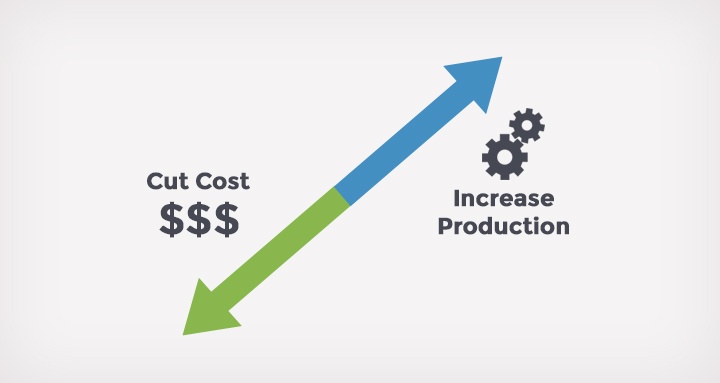
How To Increase Production While Cutting Cost

How To Increase Production While Cutting Cost
How To Increase Production While Cutting Cost
February 23, 2016
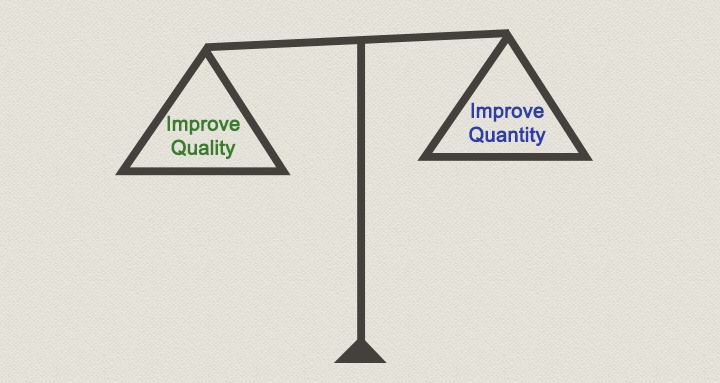
Deep Drawn: Improving Quality and Quantity
Deep Drawn: Improving Quality and Quantity
Deep Drawn: Improving Quality and Quantity
February 18, 2016
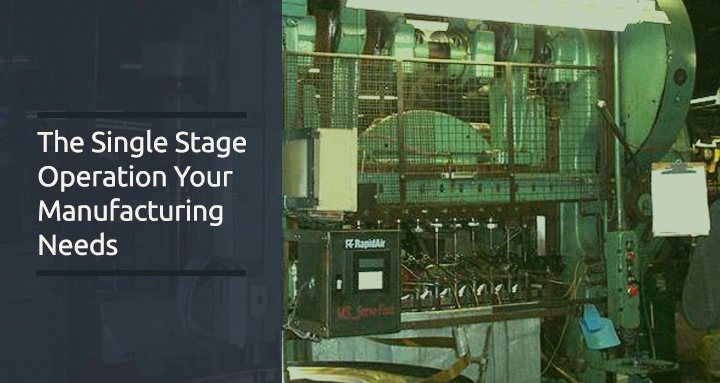
The Single Stage Operation Your Manufacturing Needs
The Single Stage Operation Your Manufacturing Needs
The Single Stage Operation Your Manufacturing Needs
February 16, 2016
The traditional approach to the manufacturing and assembling of small components and products is a combination of fabrication and machining processes. This is especially the case for the low-volume production of delicate parts where manufacturing tolerances are critical.
However, a viable alternative is to manufacture these parts by using deep drawing pressing operations. Deep drawn parts can be made to exacting tolerances, and often at a lower cost than is achievable by alternative methods. Deep drawing is feasible for small symmetrical parts that have a tubular or cylindrical shape. It is possible to stamp a wide range of materials, including carbon steel, stainless steel, copper, brass, silver and gold, to meet varying manufacturing needs.
Manufacturing Process Limitations
Although CNC machining centers are capable of producing parts of complex shapes to high tolerances, two major constraints exist. Firstly, the process is relatively slow as parts have to be machined from solid blanks that are larger than the final part, and, secondly, there needs to be sufficient material available to allow the part to be securely clamped. Another limitation is that the minimum wall thickness that is achievable is constrained by a combination of physical constraints and material properties.
A typical example of this problem is the cylindrical barrel of a pen or the inner and outer housing of tubular devices. An alternative way to manufacture such parts is to use specially drawn tubing of the right diameter and wall thickness, and to fabricate end pieces.
Both methods work, and an acceptable surface finish is attainable. However, these processes are slow, and costs are relatively high due to increased labor requirements. Additionally, once equipment is fully utilized, the ability to ramp up manufacturing volumes is constrained by the need to purchase additional machinery.
The Deep Drawn Alternative
In many instances, it’s possible to manufacture these same parts using deep drawn stamping processes. Current technology is capable of producing thin walled parts with a length to diameter ratio that exceeds 10:1, depending upon the material used. The wall thickness of the parts can be as low as seven-thousandths of an inch and critical dimensional tolerances as tight as one-thousandths of an inch are possible. These are almost impossible to achieve by other manufacturing processes.
Although deceptively simple, the design of deep drawn tooling is complex, requiring insight into material properties and deep drawing techniques. Typically, several stages of drawing are required to transform a flat, round blank into a hollow cylindrical shape. This is achieved by using multistage tooling with automated transfer systems so that one part is completed and ejected for each stroke of the specially adapted deep drawing press.
During the drawing process, parts are naturally work hardened and require no further heat treatment before use. In addition, deep drawn tooling produces an excellent surface finish that in many instances requires no further processing, especially if rust-resistant materials are used. Alternatively, parts can be coated in semi-automated processing machines or highly polished.
Increase Throughput and Lower Costs
Depending upon the size of the part, a deep drawn press can produce several thousand parts per hour. This is way above the output of comparable processes, and as a single stage operation, deep drawing greatly simplifies the assembly line.
The production cost of deep drawn parts is low, and although it is necessary to amortize tooling costs over the life of the part, the overall cost per part is almost always lower than parts produced by machining and fabrication processes. Apart from this, less material is used, tighter tolerances are possible and the final appearance of the part is usually better.

Deep Drawn: Cutting Cost In Production
Deep Drawn: Cutting Cost In Production
Deep Drawn: Cutting Cost In Production
February 11, 2016

Deep Drawing manufacturing processes offers significant cost efficiency over other manufacturing methodologies. This is particularly true in cases where specific parts have complex geometries or require a high degree of precision and accuracy. Of course, even more cost savings can be achieved with the Deep Drawn process when simple geometries are necessary or parts are required to be seamless. When coupled with the fact that the deep drawing process can reliably be undertaken with a wide range of materials, the potential for cost saving on a per unit basis becomes apparent.
Effective Efficiency
In simplistic terms, deep drawing is a manufacturing process in which a material is drawn into the shape and configuration required. There are different dies and specific processes used by a variety of manufacturers but the process itself is efficient and more effective than traditional stamping techniques. One of the advantages and cost saving aspects is the deep draw process offers minimal material waste as opposed to extrusion or machining processes. Thus there is less excess material and little, if any, waste. When you consider the material cost effect, less waste means more material is going to the product thereby maximizing the efficiency of the material used.
Direct Effects On Costs
The direct effects on costs are numerous, in the ways of producing a low cost, highly efficient alternative to traditional part production. These include;
- Better Material Handling; Meaning less material required to generate a part over traditional manufacturing techniques.
- Higher Volumes lower the per unit cost
- Accurate and Precise Part Production; Less secondaries required, thereby lowering labor costs
While not specifically bearing on the cost analysis of Deep Drawn manufacturing, Deep Drawing has the advantage of producing parts that are tight tolerance, and require significant strength while having minimal weight characteristics.
Combined, all of the above create an opportunity for lower per unit costs as well as cost savings for a project, which becomes apparent in multiple part end products. Thus providing the opportunity to put a cost effective and efficient process at your disposal.
How Deep Drawn Can Reduce Your Manufacturing Costs
How Deep Drawn Can Reduce Your Manufacturing Costs
How Deep Drawn Can Reduce Your Manufacturing Costs
January 26, 2016

Although the initial investment in deep drawn tooling is more costly, the manufacturing costs of deep drawn components are significantly lower than other processes, especially when high annual component volumes help amortize the tooling costs.
How Deep Drawn Manufacturing Can Expand Your Production Capacity
How Deep Drawn Manufacturing Can Expand Your Production Capacity
How Deep Drawn Manufacturing Can Expand Your Production Capacity
January 19, 2016
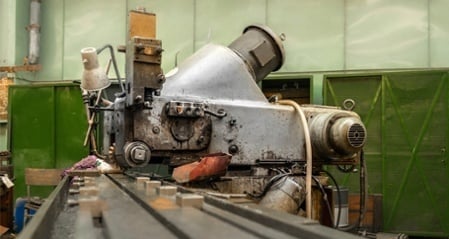
Deep drawn manufacturing of small cylindrical components offers numerous advantages over other manufacturing methods and usually results in lower costs, increased productivity and higher quality finishes.
The Commercial Benefits of Deep Drawing
The Commercial Benefits of Deep Drawing
The Commercial Benefits of Deep Drawing
January 12, 2016

While there are many different manufacturing processes available, only the deep drawing process confers both technical and commercial benefits that are not only cost effective but are efficient in terms of being responsive to customer demand and adaptable to a range of materials and specifications. Focusing on the commercial benefits of deep drawing, the efficiency of the process generates a cost savings to the unit cost of each part as well as having more esoteric savings throughout the entire process. Therefore, for your company, the deep drawing process represents an opportunity for your bottom line.
The Technical Benefits of Deep Drawing
The Technical Benefits of Deep Drawing
The Technical Benefits of Deep Drawing
January 5, 2016
Unlike other manufacturing and industrial processes, deep drawing offers several technical benefits that make deep drawn parts highly sought after by various industries and assemblers. Naturally commercial benefits abound as well, but it is the technical aspects that make the commercial benefits worthwhile. In simple terms, deep drawing is the process by which linear stress is applied to a material to draw it through a die or several dies, thus producing the final part. While some specific benefits from the process are material dependent, overall the actual process allows for diverse materials to be used, unless specific to the application. Whereas, other processes require specific materials to be used to provide the same end product.
Streamlining Slow Manufacturing Processes
Streamlining Slow Manufacturing Processes
Streamlining Slow Manufacturing Processes
December 31, 2015

A manufacturing process comprises a series of operations for the manufacture of individual components that are then assembled to produce a finished product. Initial operations are usually performed off the line as separate manufacturing processes, each with its own duration, but final product assembly is completed sequentially on the assembly line.
How to Identify If Your Current Manufacturing Process Takes Too Much Time
How to Identify If Your Current Manufacturing Process Takes Too Much Time
How to Identify If Your Current Manufacturing Process Takes Too Much Time
December 22, 2015

Many devices used by industry, law enforcement and other agencies have a cylindrical shape. Typical examples include pencil torches, writing and marking instruments and medical devices. The outer casing may be open at both ends, at one end only or be domed. For cosmetic or functional reasons, the outer casing is often polished, anodized, powder coated or plated.