



Guide
How Using Foreign Manufacturing Can Leave Your Company High and Dry

How Using Foreign Manufacturing Can Leave Your Company High and Dry
How Using Foreign Manufacturing Can Leave Your Company High and Dry
September 29, 2015

While foreign manufacturing offers the prospect of inexpensive parts and labor, the incidental costs that occur can make outsourcing to foreign manufacturers cost prohibitive over the life of the product run. In addition to having an adverse effect on costs, these same incidental circumstances can negatively impact consumer perception of your company at large. All of this is primarily due to the extended supply chain and potential disruptions that can occur with such a lengthy supply chain. No matter their size all businesses and companies, large or small, will eventually be affected by these situations.
Is American Manufacturing Worthless?
Is American Manufacturing Worthless?
Is American Manufacturing Worthless?
September 22, 2015
American manufacturing is slowly emerging from the industrial decline that occurred in the 1990s and the 2000s when there was a massive offshoring of manufacturing to China and other countries on the premise that lower wage costs would reduce manufacturing costs. What advocates of this trend did not fully appreciate were the significant disadvantages of having manufacturing performed in time zones that were out of kilter with American working hours. In addition, companies faced long shipping and manufacturing lead times that led to significantly higher inventory holding costs as well as untenable delays when changes or alterations to orders were required.
What Makes Up the Manufacturing Bottom Line?
What Makes Up the Manufacturing Bottom Line?
What Makes Up the Manufacturing Bottom Line?
September 16, 2015

Manufacturers continually face pressures to reduce costs to maintain profitability, and new suppliers entering the market increase competition and put pressure on selling prices. Another factor affecting the bottom line is the strong dollar that makes it easier for offshore companies to undercut domestic companies. Review these ways to protect your manufacturing bottom line by adopting lean manufacturing processes.
Cost of Poor Quality Products
Cost of Poor Quality Products
Cost of Poor Quality Products
September 15, 2015

Monetary consideration when it comes to manufacturing poor quality products, while challenging, is not the benchmark for negative results and costs associated with said, poor quality products. The loss of consumer perception and goodwill, has been the downfall of many companies who inadvertently were saddled with products of inferior quality than expected. Regardless of the reasons for such low quality, consumers, large or small, are quick to judge and slow to return, when there is a negative perception on the quality of a product.
Top 5 Must-Haves for a U.S. Supplier
Top 5 Must-Haves for a U.S. Supplier
Top 5 Must-Haves for a U.S. Supplier
September 8, 2015
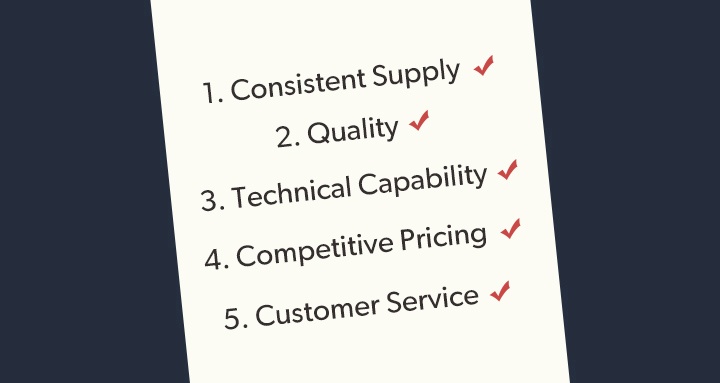
Although the days when your buyers routinely looked offshore to purchase deep drawn components are fading, it’s essential that U.S. manufacturers keep on top of the game by providing their customers with the best possible combination of service, quality and price. Here are five must-haves for a U.S. supplier.
Consistent Supply
With today’s focus on lean manufacturing, it’s essential that deliveries are made on time: they should be neither early nor late. Suppliers should be able to demonstrate a consistent track record of on-time delivery. Additionally, components supplied should be exactly to the order specification and in the right quantity. Manufacturers should be able to offer reasonable lead times to their customers.
Quality
Suppliers should operate a recognized and audited quality management system that ensures full traceability of materials sourced and shows processes are correctly followed during manufacture of components. The supplier should be able to demonstrate an ability to achieve acceptable fall-off rates?. Additionally, customer reject rates should be low and predictable.
Technical Capability
Deep drawing of components is an industry that requires substantial technical competence, especially with regard to tooling and die manufacturing use . It’s also crucial the supplier has the technical capability to understand their processes and to be able to select and, if necessary, modify hydraulic presses and other equipment to have the capability to perform deep drawing. These are specialist skills that take years to develop.
Competitive Pricing
It has already been demonstrated that it’s a fallacy to assume that manufacture in low-cost countries results in competitive pricing of components once all associated costs are factored in. However, this is not an excuse for high prices from U.S. manufacturers and you should be looking for a supplier that is able to offer your organization highly competitive pricing.
Customer Service
Look for a supplier who understands the needs of the customer and is approachable. Your deep draw supplier should have an attitude that is positive, helpful and open minded and demonstrate a willingness to understand your point of view.
The manufacturing of deep drawn components is a specialist field that entails close liaison between supplier and customer. Dealing with a U.S. based manufacturer is simple and involves no language or communication issues. Because the manufacturer is readily accessible, it’s possible for you to resolve issues quickly without the need to resort to time-consuming overseas travel to resolve minor issues or to expedite delivery.

Hidden Costs of Using a Foreign Manufacturer
Hidden Costs of Using a Foreign Manufacturer
Hidden Costs of Using a Foreign Manufacturer
September 1, 2015

3 Areas Foreign Manufacturers Fall Short On
3 Areas Foreign Manufacturers Fall Short On
3 Areas Foreign Manufacturers Fall Short On
August 27, 2015
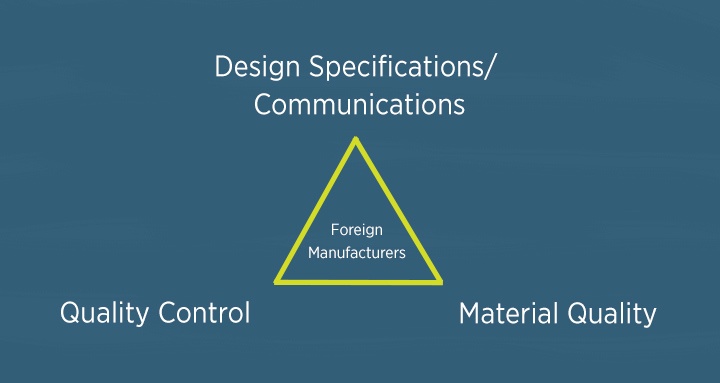
While outsourcing to a foreign manufacturer might seem like a cost effective solution, going with a foreign supplier is not without peril. Not all foreign suppliers adhere to the necessary standards and practices involved with manufacturing. Additionally, issues with quality control, material quality and difficulty of communication can create problems and issues that can affect the overall production and delivery of the product. When looking for a foreign manufacturer for your product, remember a foreign manufacturer is under no obligation to put you, the customer, first.
Material Quality
As experience has shown, in the 2007 and subsequent Mattel toy recalls, quality of materials is not always in place with foreign manufacturing. In many cases, foreign manufacturers rely on a volume business model that dictates using lesser quality materials for a higher return. This can contrast directly with other companies who use the quality assurance/customer first business model. While some foreign manufacturers will express a willingness to partner to develop a quality solution, many are only concerned about their needs and not that of their customer.
Quality Control
Everything previously mentioned about material quality can also be applied to quality control methodologies and practices in some foreign manufacturers. Minor defects in manufacturing are ignored as it is not recognized as a potential failure point during long term use. Other issues related to quality control is improper training, lack of effective quality communication and a lack of understanding towards customer expectations and needs. All of which has a negative effect on quality control in many foreign manufacturers. Often this is due to a cultural difference and not a willingness on the manufacturer to produce defective parts.
Design Specifications and Communication
Design specifications produced in one country and required in another for actual production or manufacturer can be inhibited by the communication barrier. While attempts are commonly made to address any communication difficulty, on critical components subtle differences can occur in the different meanings of words. This can lead to manufacturing problems, delays and even defective parts that can compromise the overall project.
While working with a foreign manufacturer might be cost effective in the short term, long term it is more efficient and effective to go with a domestic supplier or manufacturer when possible. The per unit cost might be higher but what is gained in quality, lack of cultural differences and communication differences, low delivery costs, better inventory programs (compound over bulk) is better for your company.
How Choosing the Right Supplier Can Make or Break Your Deep Drawn Components
How Choosing the Right Supplier Can Make or Break Your Deep Drawn Components
How Choosing the Right Supplier Can Make or Break Your Deep Drawn Components
August 25, 2015
When looking for a supplier for deep drawn components for your business, getting the right supplier or manufacturer is vital to your success. There are many suppliers but often there are more suppliers or manufacturers that will not meet your exact need than will. It goes beyond the single issue of part cost. Quality of materials, workmanship, quality control and total price with intangible costs all play a role in finding the right supplier.
Advantages of Using Deep Drawn In Medical Applications
Advantages of Using Deep Drawn In Medical Applications
Advantages of Using Deep Drawn In Medical Applications
August 19, 2015
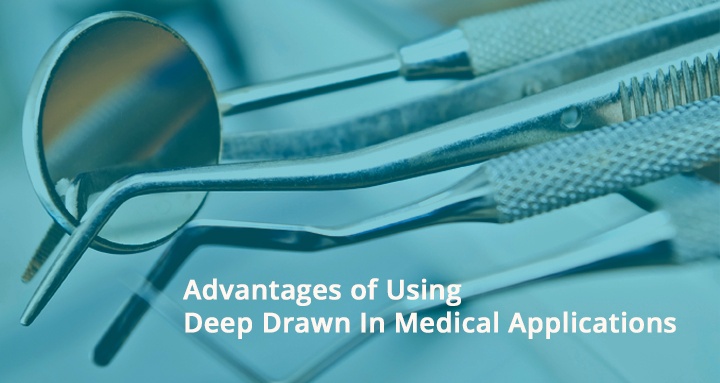
Medical equipment is manufactured to the highest standards to ensure components exhibit the right combination of characteristics such as adequate strength, proper functionality, easy sterilization and ease of manufacture. Irrespective of where or how medical components are used, healthcare staff must have confidence that they will perform the required function flawlessly with no risk of patient infection.
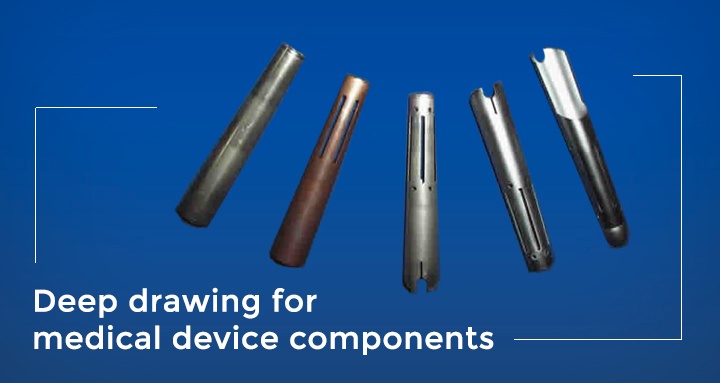
The size of medical components is always a critical factor because medical tools need to be easy to handle and in many applications, such as in dentistry, the components need to be small and strong. These requirements can be met by using deep drawing production processes, which are able to produce tubular components that are compact, yet light and strong. Deep drawing can produce parts with height-to-width ratios of 8:1 for stainless steel and greater than that for more malleable materials.
A major benefit of deep drawing is that parts produced are seamless without joints or imperfections. There are no awkward nooks, crevices and sharp angles to trap bacteria. The natural work hardening that occurs during the process means that parts produced are strong. Material thickness of parts can be tightly controlled and the process allows the manufacture of flawless parts that are extremely thin.
Unlike many other manufacturing processes, deep drawn parts have an excellent surface finish that in many instances needs no further treatment. These finishes are highly amenable to further polishing to provide a mirror-like finish. Alternative finishes, such as nickel and chrome plating, may be applied with the further advantage of being able to obtain a guaranteed 100 percent internal and external coverage.
All of this is achieved at a lower unit cost than is possible with many other manufacturing processes. Unit production costs are low especially if automated part feeding equipment is used. Naturally, the relatively high initial cost of deep drawing dies and other tooling needs to be recovered, but provided the production volumes are reasonably high, the amortized production costs for deep drawn medical parts are low.
The use of deep drawing production processes for medical components offers many advantages. Unit production costs are minimal, and parts produced are strong and have a high quality finish without any surface defects that could cause infection. Tight manufacturing tolerances can be easily achieved, and a wide range of finishes are available that include highly polished nickel and chrome plating and powder coating.
Why Is Deep Drawing so Popular for Medical Device Components?
Why Is Deep Drawing so Popular for Medical Device Components?
Why Is Deep Drawing so Popular for Medical Device Components?
August 12, 2015