




Guide
Why “Made in USA” Brand Means so Much in the Manufacturing Industry

Why “Made in USA” Brand Means so Much in the Manufacturing Industry
Why “Made in USA” Brand Means so Much in the Manufacturing Industry
December 15, 2015

After years of outsourcing manufacturing overseas on the premise that it would reduce costs, more and more Americans are beginning to appreciate that the “Made in USA” brand often means better quality at the same price. It also comes with an understanding that local manufacture is good for the economy. This trend is reinforced by programs to encourage U.S. manufacturing, led by national retailers who understand the overall economic benefit of such programs. Customers and manufacturers are both scoring as a result of these initiatives to reshore the manufacturing industry.
What’s Happening in the Manufacturing Industry Around the World?
What’s Happening in the Manufacturing Industry Around the World?
What’s Happening in the Manufacturing Industry Around the World?
December 8, 2015

Despite global upheavals, the United Nations Industrial Development Organization (UNIDO) reports the manufacturing industry around the world is growing at 2 percent per annum. Indications are this will continue, with signs of a slight increase in 2016.
Most manufacturing growth is taking place in developing countries as well as in the Emerging Industrial Economies (EIE), which together are sustaining overall growth of 5 percent. Industrialized economies are lagging far behind, and despite initial forecasts of 3 per cent growth in 2015, manufacturing growth remains below 2 percent.
However, when the results for the industrialized economies are broken down, it becomes clear that East Asia, which incorporates Korea, Japan and the surrounding countries, is facing negative growth in manufacturing, Europe is struggling at just below 2 percent, while North American manufacturing is striding ahead at 2 to 3 percent per annum. What is also interesting is that both Europe and East Asia are only just recovering from a manufacturing recession that saw negative growth in 2012 and 2013, whilst throughout this period North American growth remained steady. China, which is grouped within the EIE, has continued to experience sustained growth rates between 7 and 9 percent.
According to the KPGM 2015 CEO outlook survey, business confidence in the U.S. is higher than overall global confidence. According to the report, North American companies are adopting aggressive growth strategies with particular focus on internal growth within North America. In Europe, manufacturing companies are still struggling to recover momentum following the serious banking and liquidity crises that hit that part of the world. In the Far East, countries such as Korea and Japan are suffering from lackluster internal growth exacerbated by strong currencies.
Although Chinese growth has slightly slowed, the country, along with other Far Eastern countries, still remains amongst the lowest cost manufacturing areas. Consequently, American companies are still continuing to offshore production to these countries, although there are signs that the trend may be slowing. One reason seems to be linked to a realization that “Next Shoring,” the manufacture of goods close to where they will be sold, makes economic sense along with shorter delivery times allowing for a faster turnaround time. Although this doesn’t mean that offshoring manufacture in the Far East will necessarily be cut, it does mean that the manufacturing industry around the world is seeking to manufacture products in regions close to where there is a demand.

Which Manufacturing Process is the Most Reliable?
Which Manufacturing Process is the Most Reliable?
Which Manufacturing Process is the Most Reliable?
December 1, 2015

To some extent answering the question as to which manufacturing process is the most reliable is like answering a question about when you should take a vacation. In both cases, the answer depends upon several factors.
What Manufacturing Processes are Most Popular Overseas?
What Manufacturing Processes are Most Popular Overseas?
What Manufacturing Processes are Most Popular Overseas?
November 24, 2015
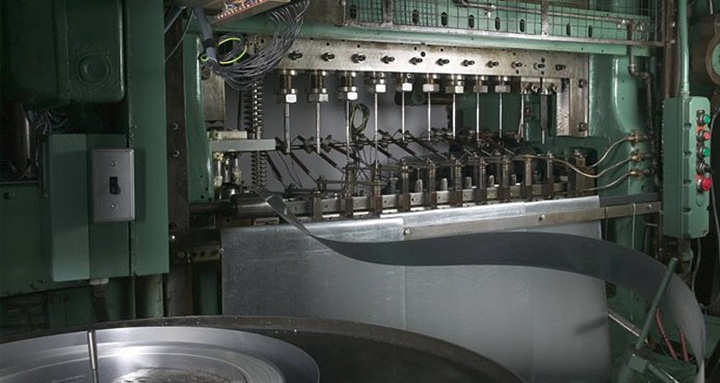
Although the trend to offshore manufacturing jobs appears to have peaked, many American companies continue to move production from the U.S. to foreign countries, usually in the belief that this will reduce labor and manufacturing costs. Research indicates that while there are clear benefits for some industries, offshoring is not always the panacea it’s made out to be. Further, as manufacturing costs overseas rise, it seems that the trend towards offshoring may be slowly reversing.
Has Manufacturing Overseas Gotten Any Safer?
Has Manufacturing Overseas Gotten Any Safer?
Has Manufacturing Overseas Gotten Any Safer?
November 17, 2015

With the demand for cheaper products, many American manufacturers assemble or purchase manufactured goods overseas. But this comes at a price because worker safety in manufacturing overseas, especially in the Far East, has always lagged behind North American safety standards. The consequences of poor worker safety is more than just the risk of injury, because negative publicity surrounding incidents can tarnish the reputation of the U.S. company that has placed the order for goods. This is especially so because society is starting to hold American companies responsible for ensuring their overseas suppliers operate safely.
What’s Destabilizing Labor Overseas?
What’s Destabilizing Labor Overseas?
What’s Destabilizing Labor Overseas?
November 3, 2015
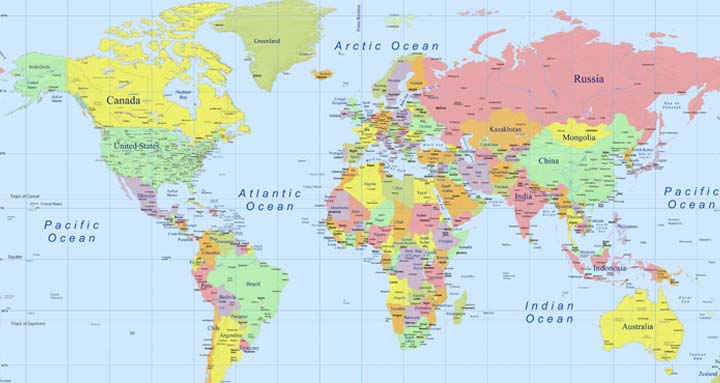
Amid the recent economic turmoil in Asia, specifically China, you might be wondering: what’s destabilizing labor overseas? The answer is not a simple one, and the issues contributing to China’s recent market troubles are not black and white.
As you may know, beginning in the 1970s, the Communist government of China created “Special Economic Zones” (SEZs), permitting foreign direct investments (FDIs) for the first time. The cities of Zhuhai, Shenzhen, and Shantou in the Guangdong Province and Xiamen in Fujian Province, as well as the island province of Hainan, were allowed a head start compared to the rest of China. They became, and continued to be, large manufacturing centers as the Chinese eased their strict economic policies.
In the past three decades, more than 500 million people have moved from rural areas into urban centers of China. It’s not stopping anytime soon–China’s government has listed urbanization as a top priority in the coming decade. It is important, though, to understand that Chinese urbanization is not occurring in the same way in every province. While many of the SEZ cities have now rejected labor-intensive manufacturing in favor of service and domestic industries, more agrarian areas are still striving to build factories and boost their economies beyond the inefficiencies of agriculture.
As China’s economy has grown, workers have demanded higher wages and better working conditions. These demands have effectively eliminated China’s one-time cost advantage and have begun to destabilize labor. So, while investments in value-added industries like hi-tech and service have proven beneficial to China, what does that mean for you as an investor in manufacturing? Quite simply, that if you are looking for the rock-bottom “China price,” you will no longer find it in China. Other Asian countries such as Bangladesh, Vietnam, and Cambodia have become the new manufacturing hubs.
To revisit the question “what’s destabilizing labor overseas?” it’s important to recognize that manufacturing has not vanished from Asia–China is just no longer its headquarters.
The Top 3 Benefits of Using American Manufacturers
The Top 3 Benefits of Using American Manufacturers
The Top 3 Benefits of Using American Manufacturers
October 27, 2015

As many buyers have discovered, local purchasing is simpler and altogether more convenient than offshore sourcing. And with the steady resurgence of high-quality American manufacturing, there are fewer reasons to purchase specialized parts and components overseas. The benefits of local sourcing are especially evident when procuring non-standard parts and components for your assembly lines. Using American manufacturers streamlines the procurement process and is far more flexible than external sourcing of the same products. Here are three top benefits of local sourcing.
Choosing a Deep Drawn Supplier: More than Just Part Cost
Choosing a Deep Drawn Supplier: More than Just Part Cost
Choosing a Deep Drawn Supplier: More than Just Part Cost
October 20, 2015
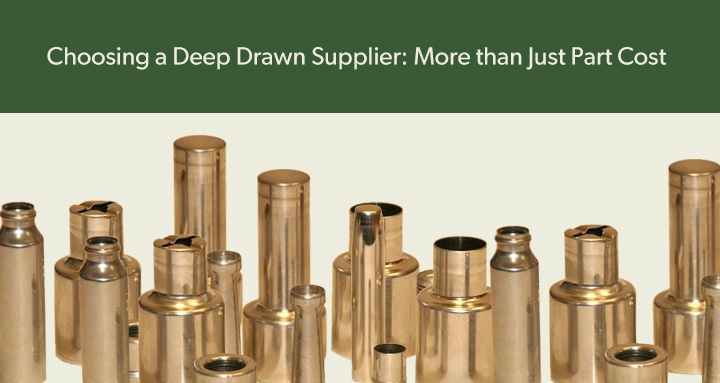
When looking for a supplier or manufacturer, companies want value and usually that value is determined by cost. Honestly, getting a deep drawn supplier or manufacturer is more than just looking at the bottom line. It’s important to look at what makes up that bottom line, are you looking at all costs associated or just standard part cost don’t make a mistake and understate your bottom line by looking only by having tunnel vision. In terms of deep drawn parts, value is quality of material, workmanship and quality control.
How Inferior Material Destroys Deep Drawn Parts and Products
How Inferior Material Destroys Deep Drawn Parts and Products
How Inferior Material Destroys Deep Drawn Parts and Products
October 13, 2015

Deep drawing processes are used to manufacture high quality parts at a lower cost than comparative processes. Deep drawing requires careful engineering to ensure successful production, with many aspects to consider including advanced technical knowledge, the design and manufacture of tooling and a good understanding of materials’ properties.
How the Chinese Stock Market Affects Manufacturing Overseas
How the Chinese Stock Market Affects Manufacturing Overseas
How the Chinese Stock Market Affects Manufacturing Overseas
October 6, 2015

Just recently the Shanghai Index started crashing leaving everyone asking “why?” Did it have to do with the price of oil being so low, was it because the Federal Reserve thinking about raising its interest rates? Perhaps it was as simple as the Chinese stock market just needed a correction. There are many different theories on the horizon, but as the world’s second largest economy, those working in the manufacturing sector were a bit rattled to say the least. How does the Chinese stock market affect the manufacturing of goods overseas?