




Guide
Top 3 Must-Haves When Getting Any Medical Components Made

Top 3 Must-Haves When Getting Any Medical Components Made
Top 3 Must-Haves When Getting Any Medical Components Made
August 4, 2015

The manufacture of components for medical equipment is governed by the FDA. Medical equipment manufacturers must be registered and the devices they manufacture specifically listed.
How Deep Drawn Medical Components Help Protect Medical Devices
How Deep Drawn Medical Components Help Protect Medical Devices
How Deep Drawn Medical Components Help Protect Medical Devices
July 28, 2015
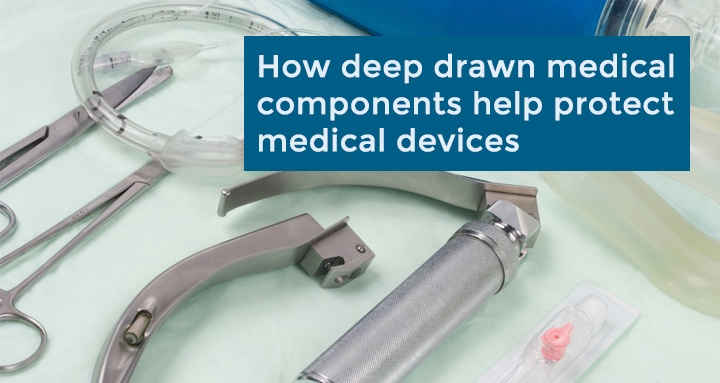
One vital and critical area of the medical arena, especially in facilities, is infection control. Simply put, infection control is the reduction or elimination of infectious elements and the procedures and materials necessary to prevent secondary infections of both personnel and patients
In reference to the materials aspect, this includes implantable and external medical devices and components. Therefore all aspects of any device or component must be designed and engineered with infection control in mind, and this is where deep drawn medical components are superior in form and function.
Deep drawn medical components and medical devices offer the ability to maintain consistent control of device or component during the manufacturing process and thus are able to provide for a uniform surface that can then be finished in such a manner as to reduce adherence by infectious agents. This, along with other infectious controls at the medical facility, reduces the likelihood of a secondary infection. However deep drawn components offer more than infection reduction.
The deep drawing manufacturing process aligns several factors, quality of the inherent material, sturdiness of design, and reliability of the specific part along with the previously mentioned infection reduction role. This complete system of processes allows for medical devices that are of the highest quality and dependability, as would be expected in a component vital for life. When one realizes that cases, shells, housings, cans, and other components are necessary for continued living and well being due to being part of medical devices and applications, it is clear why deep drawn components are superior to other components created by other methods.
Naturally, in order to reap the benefits of deep drawn medical components, one must partner with a manufacturer that is fully experienced in the deep drawing method and has the knowledge and skillset to deliver the highest quality components. In a real sense, deep drawn medical components saves lives but only if they are constructed and manufacturer with a total commitment to excellence.

List-Based Post [Blogging Blueprint]
List-Based Post [Blogging Blueprint]
List-Based Post [Blogging Blueprint]
July 28, 2015

INTRODUCTION:
The list post is one of the most popular and readable blog formats on the web. It is composed of — you guessed it — a list, and includes short explanatory paragraphs about each item.
Use your introduction as a way to tell the reader how this collection of ideas will help them. Keep it light by including a personal story. If you have any data that you can include relating to your list, include that in your introduction, too.
Here are some examples of how we use list blog posts here at HubSpot:
- The 7 Worst Types of Headlines (And How to Fix Them)
- 5 Major Challenges Marketers Face (And How to Solve Them)
- The Top 10 Qualities of High-Quality List Posts
BODY:
Now deliver what you promised in the first section. This is the longest part of the post, so make it easy to read. Use short paragraphs, bullet lists, and bold headings to set different sections apart.
Some common section headers include:
1. Reason #1 why writing a list-based post is helpful
2. Reason #2 why writing a list-based post is super helpful to your marketing
3. Reason #3 why everyone should be writing list-based posts
You can use bulleted lists, numbered list, or multiple headings. Include as many steps, numbers, or bullets that will allow you to discuss your topic thoroughly.
Here are some pointers to make the best possible body of your blog:
- Include visuals
- Include short explanatory phrases in your headers
- At the end, transition into your conclusion
CONCLUSION:
Now it’s time to say goodbye and wrap up your post. Remind your readers of your key takeaway, reiterate what your readers need to do to get the desired result, and ask a question about how they see the topic to encourage comments and conversation. Don’t forget to include a Call-to-Action!
Congratulations! What a lovely list post you’ve created!
What’s the Future of the Marker Pen Look Like?
What’s the Future of the Marker Pen Look Like?
What’s the Future of the Marker Pen Look Like?
July 21, 2015

At one time there was a belief that society would become paperless, but despite the widespread uses of tablets, laptops and smartphones, paper is still extremely popular. It seems the world is not yet ready to give up on handwriting methods and, in particular, the use of marker pens.
Is Your Premium Writing Instrument Component Manufacturer Is up to Snuff?
Is Your Premium Writing Instrument Component Manufacturer Is up to Snuff?
Is Your Premium Writing Instrument Component Manufacturer Is up to Snuff?
July 14, 2015
A Brief History of Marker Pen Components
A Brief History of Marker Pen Components
A Brief History of Marker Pen Components
July 9, 2015

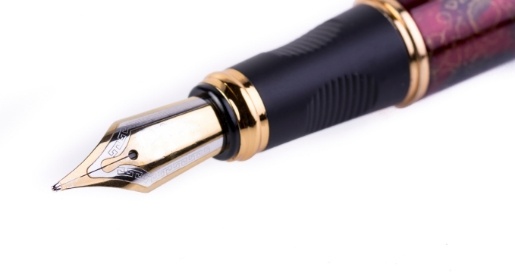
The ubiquitous pen has a long and storied history. From the first uses of a feather to scribe upon papyrus to the modern, ballpoint, the pen and specifically the marker pen, has changed the way we write as a whole.
Premium Writing Instruments as Works of Art
Premium Writing Instruments as Works of Art
Premium Writing Instruments as Works of Art
July 7, 2015

Best Materials to Use When Deep Drawing Medical Components
Best Materials to Use When Deep Drawing Medical Components
Best Materials to Use When Deep Drawing Medical Components
June 30, 2015

Over the decades, medical instruments have evolved from crudely crafted and rustic devices into what many might feel are modern works of manufacturing art. As the techniques of industry changed in line with new and tighter regulations, the resulting products became more precise, more reliable, and definitely more sanitary.
In the medical industry, sanitation is king. The drive to maintain a sterile environment regulates everything from the clothing worn by staff, to the materials used in the manufacture of the equipment that everyday saves countless lives all over the world. From the smallest needle to the most complex scanning device, every part must be diligently designed with sterility in mind.
Many of the instruments used in the medical industry are produced using the deep drawn process, as the characteristics of deep drawn parts match perfectly with the stringent requirements for medical use. In order to meet sterility demands, the materials chosen for deep drawing medical components are also carefully considered.
The term ‘stainless steel’ is one commonly heard when discussing manufacturing, although it can sometimes be misleading. There are many types of stainless steel available, and not all are suitable for medical use. Stainless steel gains its desired properties from the introduction of nickel to the composition, an element that can cause allergies in many humans. A unique alloy of stainless, called “surgical steel” contains very limited amounts of nickel yet maintains the corrosion resistant properties that make stainless a reliable material for deep drawing medical components.
Another common material used in the manufacture of medical devices is copper. While copper is sometimes mistakenly considered a less refined metal, modern alloy compositions allow for the production of components that meet the rigorous sanitation requirements yet retain the many desirable properties of pure copper. As a material, copper is naturally anti-microbial, meaning simply that biological microbes (bacteria) are unable to live and multiply on the surface, which helps in maintaining a sterile environment.
When the device requires exceptionally high strength, titanium is certainly the most popular choice. As a material, titanium is corrosion resistant, acid resistant, and exhibits extremely high tensile strength. Deep drawing medical components using titanium creates products that have a highly rigid natural grain structure, which is further enhanced by the work hardening of the deep draw process. Titanium products are well known to survive extensive lifetimes even in the harshest, most abusive environment; the human body.
Deep Drawn Products That Dentists Use
Deep Drawn Products That Dentists Use
Deep Drawn Products That Dentists Use
June 23, 2015
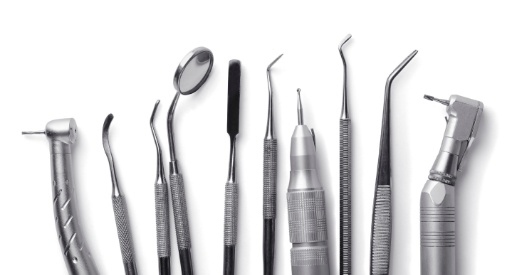
When it comes to the medical industry, there are few places more intimidating than the dentist’s office. No matter what gizmo the dentist is using, to the patient it no doubt appears absolutely medieval. To us, the strange looking contraptions used to peer and poke around in our mouths have the ominous look of something intended for far more sinister purpose.
After all of the fuss however, we all discover very quickly that in the hands of a dedicated professional, these devices are important tools in the care and protection of our precious, and only, set of teeth. The craftsmanship and quality of the delicate instruments might not be foremost in our minds, but they definitely are to the manufacturers who create them, as well as the skilled hands that use them every day.
The deep draw process has long been used in the production of the casings and protective shells for many of these delicate precision instruments. With a wide selection of available materials, highly accurate tolerances, and a vast array of possible finishes and coatings, deep drawn products have become one of the premier choices for manufacturing medical and dental instruments.
Dentists of today have a variety of sophisticated and elegant tools at their disposal. As a prime example, the advent of laser technology has provided new and innovative methods for performing exceedingly detailed procedures that previously would have required invasive surgery. Developing a laser system that is controllable enough for surgical work was no small task, however. Designers knew that the tool casings would need to be precise, durable, ergonomic, and constructed from sophisticated materials, all at a cost that made economic sense.
As a deep drawn product, the new laser technology devices became reality. With the ability to craft high precision casings from a variety of rare and exotic materials, quickly and with low cost, the application of deep drawn technology has made even intricate devices such as these both possible and affordable.
Deep drawn products have found their way into the medical and dental industry worldwide. The speed and low cost-per-part of the deep draw process provides excellent economic value to the industry, while the ability to craft high precision components from a host of different materials provides the versatility needed to remain a preferred provider.
3 Deep Drawn Medical Devices That Could Save Your Life
3 Deep Drawn Medical Devices That Could Save Your Life
3 Deep Drawn Medical Devices That Could Save Your Life
June 18, 2015

To most people, the manufacturing industry and the medical field have virtually nothing in common. Just the word manufacturing brings to mind visions of gritty, dark factories where noisy machines crank along, producing all manner of parts and products that somehow become the things we use every day. Most of us pay little attention to the process, we just happily accept that our gadgets and gizmos will be available when we want them, and will work without fail.