




Guide
Where Did the Deep Drawing Process Start?

Where Did the Deep Drawing Process Start?
Where Did the Deep Drawing Process Start?
June 11, 2015

The process of deep drawing metals to create products is rapidly becoming one of the premier methods of manufacturing. The low cost, high production speeds, and excellent finished quality of the parts has made the deep draw process a popular choice for design engineers. Most definitely the deep drawing process is well-known today, but where did it all begin?
Why the Deep Drawn Process Is Perfect for the Medical Industry
Why the Deep Drawn Process Is Perfect for the Medical Industry
Why the Deep Drawn Process Is Perfect for the Medical Industry
June 9, 2015

How Deep Drawn Ordnance Parts Help Protect the Military
How Deep Drawn Ordnance Parts Help Protect the Military
How Deep Drawn Ordnance Parts Help Protect the Military
June 4, 2015
It might not seem evident, but safety is a prime concern for members of the military. The men and women in the armed forces place themselves in harm’s way on an almost daily basis. They rely on training, skills, and properly manufactured equipment to ensure that the inherently dangerous activities they perform are as safe as possible.
Some of the safety equipment is obvious; a well-designed parachute, solidly crafted snap rings securing rappelling harnesses, even the sturdy leather boots that help protect the feet and ankles. All of these things are critical to protecting the lives and safety of the armed forces.
Often overlooked for their contribution to safety are the quality standards that are met by the manufacturers who provide the most critical of equipment, such as weapons and ammunition. Known as ordnance, it is the quality and reliability of these devices that can make the difference between a typical day of training, and a catastrophe.
All products that are manufactured for use by the military are required to meet a unique set of standards known, rightly enough, as Military Specification, or Milspec.
Deep drawn ordnance is no different. In order to ensure the proper function, strength, and tolerances, all military ordnance produced using the deep drawn method is inspected carefully to meet the stringent requirements of Milspec.
The design of military ammunition is far more precise than one might imagine. Consider for a moment the function of the brass casing during operation; the primer must be secure and located correctly, the outer dimension must be accurate and concentric, and the casing wall must withstand the force of what amounts to an explosion when fired. If any of these criteria are not met, disaster can occur.
Since the casing for a round of ammunition is for the most part a deep drawn can, the manufacturing process remains basically unchanged. The naturally seamless design and uniform wall thickness of deep drawn ordnance lends significant strength to the ammunition, which ensures the safety of the soldier firing the weapon. Additionally, the added strength in key areas of the design created through the work hardening effect of the deep drawn process provides further reliability of the product.
Deep drawn ordnance is fast becoming the primary choice for military projects, with good reason. Compared to other manufacturing methods for the same design, deep drawn products are lower cost, higher quality, and safer.

What Do People Use Deep Drawn Shells For?
What Do People Use Deep Drawn Shells For?
What Do People Use Deep Drawn Shells For?
June 2, 2015
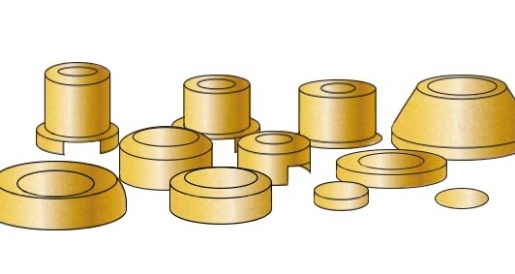
There are many things around us all that we overlook, or take for granted. Most are small, seemingly unimportant details that we hardly notice. We call them trim, or finishing, or molding, and we only really notice when they become damaged or discolored.
The Best Way to Respond to Unresponsive Deep Draw Suppliers
The Best Way to Respond to Unresponsive Deep Draw Suppliers
The Best Way to Respond to Unresponsive Deep Draw Suppliers
May 28, 2015

The Decisions Behind the Apple Watch Manufacturing Process
The Decisions Behind the Apple Watch Manufacturing Process
The Decisions Behind the Apple Watch Manufacturing Process
May 26, 2015
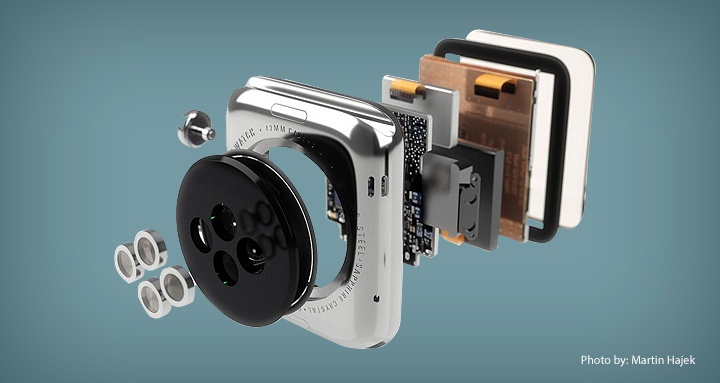
The sophisticated manufacturing process used in the creation of the new Apple watch combines technology with engineering to produce a product that is as beautiful to look at as it is complicated to construct.
3 Myths About 3D Printing
3 Myths About 3D Printing
3 Myths About 3D Printing
May 21, 2015
Frequently Asked Questions for Deep Drawn Suppliers About Deep Drawn Tubes
Frequently Asked Questions for Deep Drawn Suppliers About Deep Drawn Tubes
Frequently Asked Questions for Deep Drawn Suppliers About Deep Drawn Tubes
May 19, 2015

The deep draw process is very well known for manufacturing products such as caps, ferrules, and other small items, but can often be overlooked as an option when the project calls for tubes. No doubt, this is due to some common misconceptions regarding the capabilities of the latest deep drawn stamping technology.
3 Most Commonly Asked Questions About the Deep Drawn Forming Process
3 Most Commonly Asked Questions About the Deep Drawn Forming Process
3 Most Commonly Asked Questions About the Deep Drawn Forming Process
May 14, 2015

The deep draw forming process is rapidly gaining popularity as one of the most cost effective and sought after methods of manufacturing, and with good reason. The process is capable of creating parts from a vast number of different materials quickly, efficiently, and at low cost, generating plenty of interest from markets all over the world.
3 Tips to Communicating with Your Deep Drawn Stamping Supplier
3 Tips to Communicating with Your Deep Drawn Stamping Supplier
3 Tips to Communicating with Your Deep Drawn Stamping Supplier
May 12, 2015

In any project, communication is the key. Without a strong communication plan, some of the most pertinent information can get lost in the shuffle. When starting a new project, it isn’t always easy to establish a good base of communication as everyone involved typically has their own ideas and experiences. This can lead to some very interesting, but damaging, gaps in information.